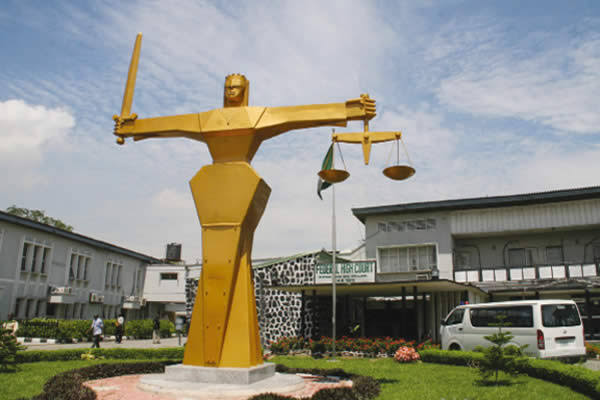
For the past several months in 2025, the Nigerian judiciary has become a mirror of hope for the helpless soul. There are several landmark judgments delivered by our justices; the judgments ignite the light of justice in our judiciary system. Our justices made us believe that court is the perfect place to seek justice, resurrect the hope of justice, and suppress the bigotry statement against the judiciary.
Among the judgments are:
1. NDIC v. Cowrie Business Solutions Ltd & Union Bank of Nigeria (2025) SC.CV/552/:
In this case the Supreme Court dismissed a major appeal on the ground of abuse of court process, emphasizing that a litigant cannot pursue the same matter simultaneously in different courts (parallel proceedings). This judgment reinforces principles of judicial economy and finality in litigation. In other words, the Court emphasized that a litigant has no right to simultaneously pursue two processes in different courts seeking the same effect, characterizing such practice as turning adjudication into a “game of chance” or “gamble.”
2. Attorney-General of Adamawa State & 19 Ors v Attorney-General of the Federation (Suit No SC/CV/329/2025):
In this case, the Supreme Court did not endorse that the President has the power to dissolve the elected Governor during emergency rule in any state of the Federation. The Supreme Court only dismissed the case for want of jurisdiction on the ground that the plaintiffs (states who sue) lacked the locus standi to maintain the action.
Mohammed Baba Idris JSC (who read the lead judgement) stated that Section 305 of the Nigerian Constitution does not empower the president to temporarily dissolve executive and legislative institutions of a state during emergency rule. According to his Lordship:
“By virtue of sections 4-7 of the Constitution, governmental power is divided among the Executive, Legislature, and Judiciary and distributed across the Federal, State, and Local Government tiers. No arm or tier of government is constitutionally superior to another, and none may lawfully usurp the powers expressly vested in another…”
3. The Supreme Court reversed the presidential pardon granted to Maryam Sanda on the ground that the case is still on appeal. The Supreme Court emphasized that the Executive should respect the judiciary’s integrity and be bound by the principle of separation of power—in the matter that is still in court, the president has no power to grant a presidential pardon.
4. La Casera Company PLC v. Prahlad Kottappurath Gangadharam (2025) unreported:
The Court of Appeal delivered a notable ruling refining the doctrine of restraint of trade, setting important precedent in commercial jurisprudence on the enforceability and reasonableness of restraint clauses in commercial contracts. The court emphasized that a company can’t impose a doctrine of restraint of trade that infringes the constitutional rights of the employee. For employers, the decision provides a roadmap for creating enforceable restraint clauses while respecting employee rights. For employees, it offers protection against oppressive restrictions while acknowledging the legitimate needs of employers to protect genuine business interests.
5. In FRN v Nnamdi Kanu (2025): This high-profile case on terrorism against Nnamdi Kanu laid a historical foundation in the Nigerian judiciary system. The court held that “a charge filed under the wrong law will not be invalid, but it will be regarded as incompetent. The amendment of an act doesn’t affect the trial of the defendant.”
Those judgments showed a significant rise in output and judicial productivity. They indicated that influence, authority, and personality cannot determine what justice is; they shamed the bigoted statement against the judiciary and unleashed the skin of injustice.