Ondo State was created on February 3, 1976, out of the old Western State, amid enormous promise. That promise found its clearest expression between 1979 and 1983 under the leadership of Chief Adekunle Ajasin. His administration prioritised free education, a disciplined public service, and people-oriented governance, laying foundations that gave citizens genuine hope for the future. Beyond the state, Ajasin projected Ondo State into national consciousness through moral clarity, principled and intellectual leadership, earning the state respect as a bastion of progressive governance. To this day, that era is widely regarded as Ondo State’s gold standard, a time when leadership was defined by vision, performance, and moral authority.
Fifty years later, that legacy invites sober comparison. At 50, Ondo State stands at a point where it must look beyond the celebrations. A Golden Jubilee is not merely a celebration of survival. It is a moment to measure progress against potential. By that standard, Ondo State’s journey raises deeply troubling questions. Across education, healthcare, and infrastructure, the core pillars of development, the evidence points not to sustained advancement, but to gradual and persistent decline.
Ondo State was built on education. In the 1970s and 1980s, institutions such as Victory College, Ikare, Imade College, Owo, Aquinas College, Akure, and Ondo Boys’ High School, among others, defined excellence. Admission was competitive, standards were enforced, and graduates competed nationally with confidence.
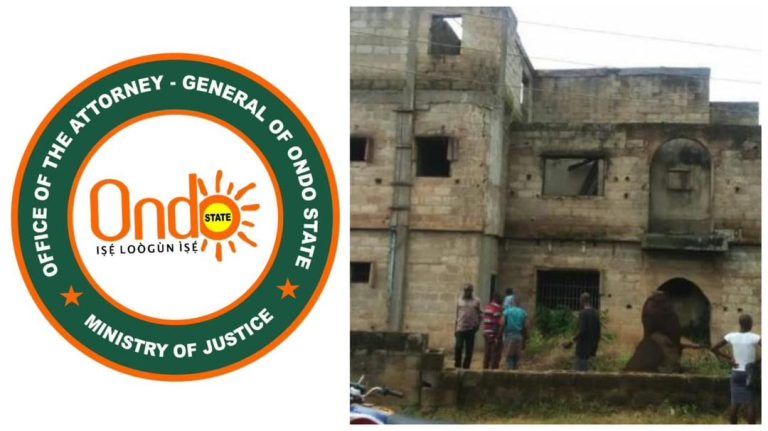
Today, many of these schools are shadows of their former selves. Infrastructure is dilapidated, learning environments are uninspiring, and discipline has weakened. This decline is not accidental. It is the consequence of prolonged neglect, politicisation of school administration, chronic underfunding, and the abandonment of long-term educational planning.
The Unity Secondary Schools, one of which I proudly attended between 1986 and 1992, established in 1985 to mirror the Federal Government Colleges and promote merit-driven education, have suffered the same fate. What was once a ladder for social mobility has become another casualty of government indifference.
The tragedy becomes unmistakable when Ondo’s once great secondary schools are placed side by side with their true contemporaries across the old Western Region. Schools founded in the same era and mould, such as Oduduwa College, Ile-Ife, Abeokuta Grammar School, Ibadan Grammar School, and Ijebu Ode Grammar School, have retained prestige, upgraded facilities, leveraged strong alumni networks, and maintained high national ratings. This contrast demolishes every excuse. It proves that decline is neither inevitable nor cultural. It is the direct result of abandonment, poor policy choices, and the failure of successive governments to treat education as heritage rather than a budgetary burden.
In Ondo State today, parents and guardians have sought alternatives by enrolling their children in private schools as a result of fallen standard of public primary and secondary schools.
The tragedy deepens at the tertiary level. Ondo State Polytechnic, now Rufus Giwa Polytechnic, once ranked among Nigeria’s best state-owned polytechnics, has lost its relevance, not even the conversion to a university has salvaged it. Adekunle Ajasin University, formerly one of the country’s leading state universities, has steadily lost its standing. The Faculty of Law, the pride of the institution, has been under interim accreditation since 2023. If care is not taken, the Faculty may be deaccredited in the next phase of the accreditation exercise. The University of Medical Sciences (UNIMED), Ondo, remains a rare ray of hope, but it stands largely alone. Without TETFund sponsored projects, most of our tertiary institutions would be reduced to mere carcasses.
At 50, Ondo State confronts an uncomfortable contradiction. It is the only oil-producing state in the South West, yet it remains among the least developed in visible infrastructure. Roads, public buildings, schools, and hospitals tell a story not of renewal, but of neglect. What real value has the creation of a state delivered to the ordinary citizen since 1976?
Late in December, the state government celebrated the revalidation of the Ondo Deep Sea Port project. Ordinarily, the Golden Jubilee should have provided an opportunity to move beyond announcements and focus on concrete steps towards implementation. When completed, the Deep Sea Port is projected to serve as a catalyst for industrial growth, job creation, and regional economic development. Yet, beyond the fanfare that greeted the revalidation, there has been no clear timeline, financing framework, or visible progress to reassure citizens that the project is moving from paper to reality. The episode reinforces a recurring pattern in Ondo State’s governance, grand declarations unaccompanied by tangible outcomes.
The Golden Jubilee programme itself illustrates the governance crisis and exposes the hollowness of celebrations without substance. A review of activities released by the Commissioner for Information, Mr Idowu Ajanaku, shows that not a single project is slated for commissioning throughout the one-week celebration. After more than two years in office, the inability of the Lucky Aiyedatiwa administration to commission even one tangible project speaks louder than any press release. What aspect of the lined-up programme has direct benefit to the people? Governance has been reduced to pageantry, banners without substance, speeches without evidence, celebrations without tangible achievements.
While I acknowledge ongoing efforts at urban renewal in some parts of Akure, the state capital, large swathes of the state remain desperate for basic infrastructure. Golden anniversaries are moments of legacy. They attract national attention when there is progress to inspect and leadership to applaud. The deeper tragedy for Ondo State is not merely the absence of projects, but the absence of ambition. Governance has become an exercise in survival rather than transformation. While others use milestones to redefine their futures, Ondo State appears content with managing decline.
The pride, prestige, courage, and commanding voice of the late Governor Oluwarotimi Akeredolu, which once resonated across the nation, are now sorely missed. Before him, Ondo State had enjoyed national relevance under leaders who projected its influence beyond its borders. Chief Adekunle Ajasin gave the state moral authority and intellectual leadership rooted in principle. Dr Olusegun Agagu strengthened Ondo State’s strategic relevance through political bridge building and technocratic engagement at the national level. Dr Olusegun Mimiko elevated the state’s visibility through innovative social policies that attracted national and international attention. Today, that lineage of nationally consequential leadership has been broken. Ondo State, once defined by principled leadership and a strong presence in national discourse, has faded into near obscurity, known for little of substance or distinction.
At 50, Ondo State deserved leadership anchored in vision and purpose. What it received is power without direction. This is not a Golden Jubilee. It is a golden missed opportunity.
As Ondo turns 50, the question is no longer whether the state once worked, it did. The real question is whether today’s leaders possess the courage to return to the path charted by our founding fathers: governance with purpose, policies with people at the centre, and development measured not by press releases, but by lives improved.
Did we miss an opportunity in 2024? Perhaps. But 2028 still offers a chance for renewal if citizens resolve to redirect leadership recruitment away from pettiness, political convenience, and sentiment, towards purposeful, ideal-driven governance. Competence, capacity, innovation, and exposure must replace an overemphasis on rotation that has yielded little or nothing. Without this resolve, future anniversaries may offer even less to celebrate.
Wale Obanigba, a lawyer, writes from Akure. He can be reached via waleobanigba@gmail.com