The Indigenous People of Biafra (IPOB) has launched scathing allegations against three senior Nigerian judges, accusing them of orchestrating what the group describes as a historic collapse of legal integrity in the country. In a statement issued Tuesday by its Media and Publicity Secretary, Emma Powerful, IPOB claimed that Justices James Omotosho (Federal High Court, Abuja), Mohammed Lawal Garba (Supreme Court), and Haruna Tsammani (Court of Appeal) are the “architects of Nigerian judicial collapse and erosion of justice.”
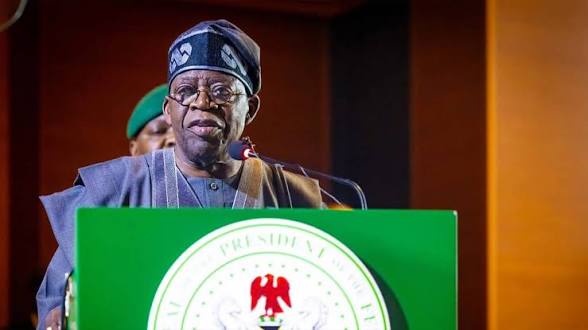
IPOB set the context by referencing President Bola Tinubu’s recent speech on the rule of law, which it interpreted as a message “not at politicians or security agencies in Nigeria, but at judges whose rulings allegedly ‘vandalised the Constitution’ and ‘destroyed judicial integrity.”
Justice James Omotosho was singled out as “the emblem of a broken judiciary,” with IPOB accusing him of “sitting on repealed laws, reviving non-existent offences, and shutting his court to block applications.” Powerful charged, “If judicial rascality had a flag, Omotosho would be the coat of arms.” IPOB alleges Omotosho ignored Supreme Court pronouncements regarding the rendition of its leader Nnamdi Kanu, regarding constitutional provisions as optional and displaying what it termed “judicial lawlessness.”
Justice Garba of the Supreme Court faced criticism for authoring the December 15, 2023 judgment in Federal Republic of Nigeria v. Nnamdi Kanu, which IPOB claims “destroyed double-jeopardy protections” and “remitted Kanu for retrial despite a prior judicial discharge.” IPOB further accused Garba of “substituting repealed laws, dismissing the domesticated African Charter, and issuing a judgment ‘dripping with contradictions and dead statutes.’” Describing the verdict as “the most internally contradictory Supreme Court judgment since 1999,” IPOB painted Garba’s role as pivotal in eroding core safeguards of Nigerian justice.
The accusations continued with Justice Haruna Tsammani, whom IPOB said laid the “foundational stone of judicial disaster” on a Court of Appeal panel ruling in 2022. The group argued that Tsammani “violated the doctrine of functus officio by revisiting a settled ruling and used a civil appeal process to overturn a criminal discharge—an act IPOB likened to ‘the procedural equivalent of performing heart surgery with a broom.”
Additional allegations claimed Tsammani invented a judicial doctrine requiring presidential approval for discharges involving national security, further undermining established legal norms.
IPOB stated, “Tsammani planted the poison seed, Garba watered it with constitutional heresy, and Omotosho harvested the rotten fruits,” suggesting that the trio “collectively reshaped Nigeria’s legal landscape for the worse.” The statement concluded: “Their names are now engraved in the dark chapter of Nigerian legal history.”
These allegations arise amid a long-running legal and political battle over the arrest, rendition, detention, and prosecution of IPOB leader Nnamdi Kanu, a case that has triggered multiple, sometimes conflicting, judicial decisions. Kanu was detained in 2015 and controversially returned to Nigeria from Kenya in June 2021. Although discharged by the Court of Appeal in October 2022, subsequent rulings—including those by Tsammani’s panel and later the Supreme Court—have repeatedly reopened his case, sparking allegations of executive interference and judicial inconsistency. Human rights organizations continue to raise alarms about unlawful rendition, constitutional violations, and shifting interpretations by the courts.
IPOB, through Powerful, asserted that “President Tinubu’s speech was a direct indictment of the judiciary’s current state, reminding judges of their constitutional responsibilities that, in IPOB’s view, have been egregiously abandoned.” The group’s accusations—studded with charged metaphors and direct quotations—underscore rising tensions over the fate of Kanu and the future direction of Nigerian justice.