Special counsel to Nnamdi Kanu, Aloy Ejimakor, has strongly rejected the continued branding of the IPOB leader as a terrorist, insisting that a court ruling alone does not define the character or legitimacy of an accused person.
In a statement posted on X, Ejimakor argued that judicial declarations should not be accepted as absolute truth, especially when they appear inconsistent with established legal principles. He drew a parallel with global historical figures once criminalised by the state but later vindicated.
“While appreciating Hon. Bello El-Rufai for condemning the harsh and unusual penalty imposed on Mazi Nnamdi Kanu, it must be stated clearly: MNK is not a terrorist simply because a court labelled him one. Mandela was once declared a terrorist, yet history reversed that judgment. MNK will equally triumph,” Ejimakor wrote.
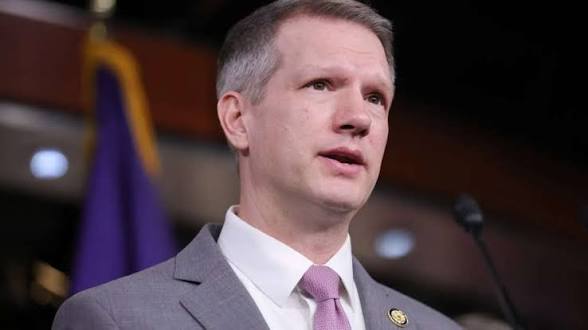
Ejimakor’s statement followed concerns raised in the House of Representatives by Muhammad Bello El-Rufai, the member representing Kaduna North. During Thursday’s plenary, El-Rufai queried what he described as a troubling pattern of unequal justice in Nigeria’s handling of high-profile security cases.
He pointed to a recent judgment in which a convicted Boko Haram member, Hussaini Ismail, was sentenced to 20 years’ imprisonment—barely a week after Nnamdi Kanu was handed a life sentence.
“I don’t understand why one terrorist gets 20 years and another gets life,” El-Rufai said. “This disparity reinforces the belief that justice is applied differently across groups, and that perception contributes to our security challenges.”
The lawmaker warned that inconsistent sentencing undermines public confidence in the judiciary and complicates national security efforts, especially in regions already struggling with distrust of federal institutions.
While expressing support for President Tinubu’s recently announced security architecture, El-Rufai stressed that Nigeria’s problem has never been a lack of plans but a failure to implement them effectively.
“Our issue is not policy statements. Our issue is execution—execution with timelines, accountability, and measurable results,” he said, urging parliament to insist on enforceable deadlines for all security-related directives.
He further renewed his advocacy for decentralised policing, arguing that the federal structure is too centralised to manage the country’s sprawling security challenges.
“We cannot sit in Abuja and expect policing to be effective in remote communities,” he maintained. “State and communal policing, with traditional institutions integrated into local security frameworks, is essential.”
El-Rufai also raised alarm over Nigeria’s policing capacity, stating that the average police officer is responsible for about 600 citizens—far above the United Nations’ recommended ratio of 1 to 400.
“This shortage is dangerous. If we expect efficiency, we must invest in salaries, equipment, and welfare,” he said.
The debate surrounding Kanu’s sentencing has revived conversations about judicial consistency, proportional punishment, and constitutional standards for designating individuals or groups as terrorists.