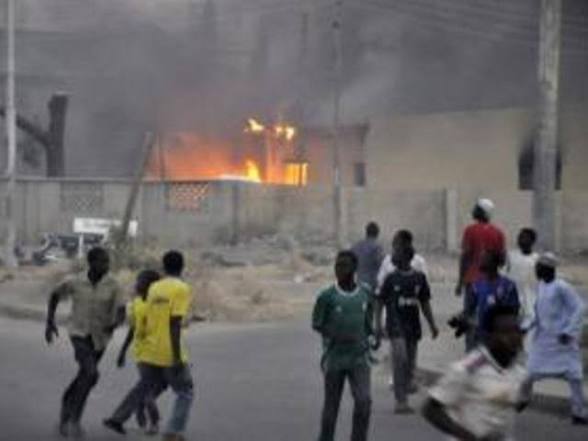
The United States Department of State has announced new measures targeting individuals responsible for religiously motivated violence in Nigeria and several other countries. The policy, released on Wednesday, focuses on actors linked to attacks on Christian communities, including radical Islamist groups, Fulani militias, and others identified as perpetrators of religious persecution.
According to U.S. Secretary of State Marco Rubio, the move is a direct response to persistent mass killings and assaults on Christian populations. The new framework relies on Section 212(a)(3)(C) of the U.S. Immigration and Nationality Act, which authorizes visa restrictions for individuals who have directed, supported, or participated in violations of religious freedom. When applicable, the penalties may also extend to the immediate family members of those sanctioned.
The announcement reflects the position of President Donald Trump, who has repeatedly warned that the U.S. “cannot stand by” while such violations continue in Nigeria and elsewhere. Rubio stated that the restrictions could apply to both government actors and private individuals involved in religious-freedom abuses.
The development follows a briefing held on Tuesday by U.S. House Republicans, which examined increasing religious violence in Nigeria. The session was convened at the direction of President Trump after his October 31 directive to the House Appropriations Committee to investigate reports of widespread attacks on Christians. The briefing was led by Mario Díaz-Balart, Vice Chair of the Appropriations Committee and Chair of the National Security Subcommittee, and included lawmakers from both the Appropriations and Foreign Affairs Committees, alongside experts on international religious freedom.
Participants in the meeting included Representatives Robert Aderholt, Riley Moore, Brian Mast, and Chris Smith; Vicky Hartzler, Chair of the U.S. Commission on International Religious Freedom; Alliance Defending Freedom International’s Sean Nelson; and Dr. Ebenezer Obadare of the Council on Foreign Relations.
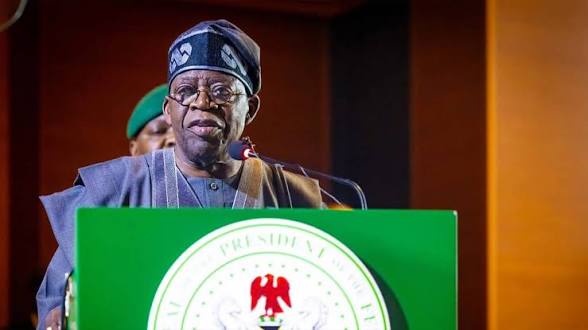
In response to mounting concerns, President Bola Tinubu recently approved Nigeria’s delegation to a newly formed U.S.–Nigeria Joint Working Group that will implement security commitments made during high-level engagements in Washington. The move comes amid rising incidents of terrorism, banditry, and targeted violence against Christian communities, prompting the U.S. to intensify monitoring efforts.
On November 20, the U.S. House Subcommittee on Africa held a public hearing to review President Trump’s decision to redesignate Nigeria as a “Country of Particular Concern,” a label reserved for nations with severe violations of religious freedom. Lawmakers used the session to examine potential consequences of the designation, including the possibility of sanctions against Nigerian officials found complicit in religious persecution.
The increased scrutiny marks a significant shift in U.S.–Nigeria relations, signalling heightened expectations around the protection of vulnerable religious groups and the enforcement of accountability for rights violations.