The Nigerian Senate convened an emergency plenary on Tuesday in response to public protests and criticism over the recently passed Electoral Act Amendment Bill 2026, which addresses electronic transmission of election results.
Senate President Godswill Akpabio expanded the membership of the Senate Conference Committee from 9 to 12, aligning with the House of Representatives. The committee was tasked with finalizing deliberations on the bill, with the expectation that President Bola Tinubu would sign it into law by February.
A key point of contention remains Clause 60, Subsection 3, which outlines electronic transmission of results. The Senate retained the provision from the 2022 Electoral Act rather than mandating real-time transmission, citing potential legal complications from network failures. In case of technical issues, presiding officers may transmit results manually using Form EC8A.
The emergency session saw heated debate, including calls from Senator Enyinnaya Abaribe for individual votes. Some senators defended the bill, emphasizing that over 85% supported electronic transmission, with the only change being the removal of the phrase “in real time” due to network concerns.
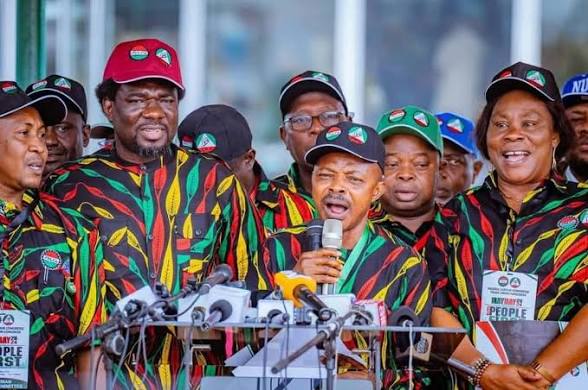
The decision sparked the “Occupy National Assembly” protest on Monday, with civil society groups and opposition leaders, including Peter Obi, demanding mandatory real-time electronic transmission to enhance election credibility.
Akpabio clarified that the Senate did not reject electronic transmission, but aimed to provide INEC flexibility in choosing the safest and most reliable method. Former Senate President David Mark echoed this, urging the National Assembly to allow INEC to decide the approach.