A former Special Assistant on Media and Publicity to ex-President Muhammadu Buhari, Garba Shehu, has described as bundle of lies claims by ex-President Goodluck Jonathan that his principal was once nominated as a representative of the Boko Haram sect in the mediation peace talks with the Federal Government.
Jonathan, speaking in Abuja on Friday at the public presentation of ‘Scars’, a book authored by former Chief of Defence Staff, Gen. Lucky Irabor (retd.), revealed that his administration had constituted several committees to explore dialogue with the sect, and in one instance, the insurgents named Buhari as their preferred negotiator.
The former President said that Boko Haram chose Buhari as its negotiator to meet with a committee set up by his government.
“One of the committees we set up then, the Boko Haram nominated Buhari to lead their team to negotiate with the government. So, I was feeling that, oh, if they nominated Buhari to represent them and have a discussion with the government committee, then when Buhari took over, it could have been an easy way to negotiate with them, and they would have handed over their guns.
“But it is still there till today. “I thought that immediately I leave, within a reasonable time, late Gen. Buhari was going to wipe them out. But till today, Boko Haram is still there. So, the issue of Boko Haram is a little more complex than we sometimes can conjure,” Jonathan said.
But in a statement made public and discovered by the Legal Observer, Shehu described Jonathan’s account as “utter falsehood,” stressing that the terrorists never nominated Buhari for any mediation role.
“Muhammed Yusuf or Abubakar Shekau, the deceased leaders of the Boko Haram terrorist group, never nominated Muhammadu Buhari for any such role. In fact, Shekau routinely denounced and threatened Buhari, and their ideologies were in direct opposition,” Shehu said.
He recalled that in 2014, Buhari narrowly escaped a bomb attack by Boko Haram in Kaduna, which left members of his personal staff injured.
According to Shehu, Buhari’s campaign messages consistently centred on defeating Boko Haram and restoring security, putting him in direct opposition to the sect’s leadership.
Shehu also cited an earlier denial issued by the then Congress for Progressive Change in 2012 when a faction of Boko Haram, through one Abu Mohammed Ibn Abdulaziz, claimed Buhari and other northern leaders were chosen as possible mediators.
At the time, Buhari publicly disowned the claim through CPC’s then National Secretary, Buba Galadima, who said the general had not been contacted and dismissed the speculation as politically motivated.
Shehu, in his strongly worded rebuttal on Friday, said Jonathan had made a “false start” if the claim was part of a build-up to his alleged 2027 political ambition.
“To win in 2027, Dr Jonathan should look for a better story to tell Nigerians,” he added.
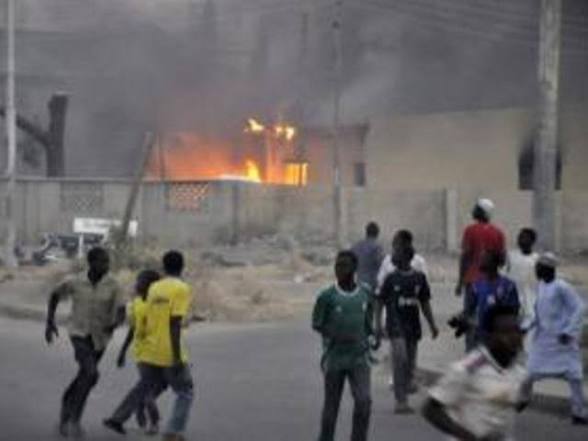
Also speaking at the event, former President Olusegun Obasanjo expressed concern that the Boko Haram insurgency, which has ravaged Nigeria for more than 15 years, is gradually becoming an accepted reality in the country.
Reflecting on the country’s history of violent conflicts, Obasanjo noted that Nigeria had survived major security challenges, including the Tiv riots, the civil war, and episodes of militancy, but expressed worry that, unlike past crises, Boko Haram has lingered for 15 years without a decisive resolution.
“This is not the first time Nigeria is facing a military-type security challenge. We had some militant activity before Independence, then the Tiv riot, and the civil war, which lasted 30 months. But after 15 years, Boko Haram is now virtually becoming part of our lives. Should we accept that?”
Obasanjo, who was the chairman of the occasion, recalled that in 2011, after Boko Haram bombed the United Nations office in Abuja, he travelled to Maiduguri to investigate the group’s motives, revealing that the insurgents were not interested in politics or religion but in the pursuit of better living conditions.
He said, “I found that they were not really aiming for anything political, nor anything seriously religious. In short, they were looking for a better life. The question is: have we understood that? And if we have, have we taken the right steps?”
He called on the Federal Government and security agencies to confront the insurgency with deeper understanding and urgency, warning against complacency.
“We have to ask ourselves the necessary questions to be able to deal with this thing that is now becoming a monster within our country,” he added.
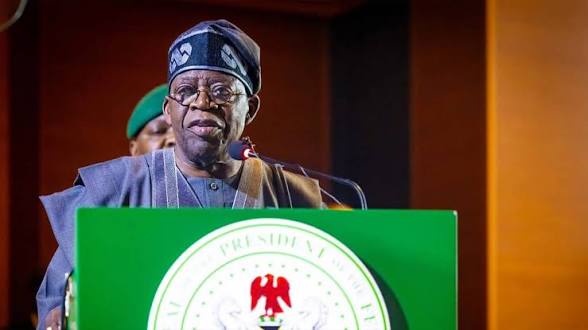
In his address, President Bola Tinubu reiterated his administration’s commitment to ending insecurity in Nigeria, pledging that his government will not relent until peace and stability are restored across the country.
“Under the Renewed Hope Agenda, we are determined to transform Nigeria into a nation of peace, opportunity and unity. Let all Nigerians be aware that we will not rest until we defeat all indices of insecurity.
“We are modernising our armed forces with modern platforms and relevant technologies. We are also streamlining intelligence gathering capability and deepening regional partnership towards collective security,” Tinubu said.
The President noted that his government is pursuing a whole-of-society approach to security, ensuring that peace is not only won on the battlefield but also sustained in daily life with the participation of citizens.
“We are investing in a whole society approach to security so that peace is not only won on the battlefield but sustained in daily life with participation of the citizens,” he stated.
The President assured Nigerians that his administration would remain steadfast in its efforts to defeat insurgency, terrorism, banditry, and other forms of insecurity threatening the country.