Nigeria’s tax system is set for a historic overhaul as the Federal Inland Revenue Service (FIRS) has announced that food, education, shared transportation, and agriculture will be exempted from value-added tax under sweeping new reforms.
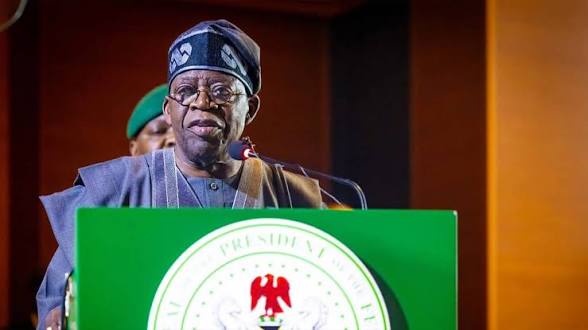
The Executive Chairman of FIRS, Zacch Adedeji, disclosed the changes in an interview marking his two years in office, describing the reforms as the most significant fiscal transformation since independence. He credited President Bola Tinubu for fulfilling his campaign promise to simplify tax compliance and ease the burden on businesses and citizens.
“With these new laws, food, education, transport, and agriculture will be VAT-free,” Adedeji said. “The President has fulfilled his promise to make businesses flourish by removing burdens and hurdles. This is the best thing that has happened to Nigeria’s fiscal ecosystem since 1960.”
The reforms consolidate multiple tax laws into a single code scheduled to take effect in January. They reduce the number of tax types to single digits, introduce a simplified framework for individuals and businesses, and provide relief for smaller enterprises. Under the new provisions, businesses with annual turnover below ₦50 million will no longer pay tax, while thresholds for personal income tax have been adjusted to protect low-income earners.
On June 26, 2025, President Tinubu signed four landmark bills into law — the Nigeria Tax Act, Nigeria Tax Administration Act, Nigeria Revenue Service Establishment Act, and the Joint Revenue Board Establishment Act. Collectively known as the “Tax Acts Quartet,” the laws aim to broaden the tax base, improve compliance, and enhance transparency across all tiers of government.
Tinubu also appointed Taiwo Oyedele, Fiscal Policy Partner and Africa Tax Leader at PricewaterhouseCoopers, as chairman of the Presidential Committee on Fiscal Policy and Tax Reforms. The committee, made up of experts from both the private and public sectors, has been central to designing and implementing the reforms.
Adedeji said the impact of the reforms is already visible. Nigeria’s tax-to-GDP ratio has risen from 10 per cent to 13.5 per cent in just two years, with a target of 18 per cent by 2027. In August, the federation account disbursed a record ₦2 trillion, with nearly 70 per cent of monthly government allocations now sourced from taxes collected by the FIRS.
He noted that improved revenue has helped 30 states repay ₦1.85 trillion in debts within the past 18 months, while debt servicing costs — previously consuming 90 per cent of government revenue — have dropped to about 50 per cent. External reserves have also grown on the back of stronger fiscal stability.
As part of the reforms, FIRS will be renamed the Nigeria Revenue Service (NRS) to reflect its role as the central tax authority for all tiers of government. “The word ‘federal’ gave the wrong impression that we only collect for the federal government,” Adedeji explained. “In reality, we collect VAT, of which 90 per cent belongs to the states.”
He further credited Tinubu’s broader economic measures — including fuel subsidy removal and exchange rate unification — with boosting the health of the federation account. “There are no longer bogus subsidy claims to deplete the pool,” he said.
Adedeji acknowledged that the reforms have caused short-term hardship, comparing it to “the pain of a woman in labour.” However, he stressed that government interventions such as compressed natural gas buses and crude-for-naira support for local refiners are already cushioning the effects, with fuel prices beginning to stabilize.
He also explained that the consolidated tax law strengthens compliance and curbs evasion by restructuring operations. Taxpayers are now grouped into small, medium, and large categories, with one-stop shops created for filing and payments. “We are service providers to taxpayers rather than just an enforcement agency,” he said.
Addressing concerns about a petrol surcharge included in the new law, Adedeji clarified that it would not take effect automatically. “It will only apply if activated by a ministerial order and published in the official gazette,” he noted.
Calling on Nigerians to embrace the reforms, Adedeji concluded: “When companies are doing well, expanding, and making profits, we will benefit from their growth. Our task is to remove hurdles in their way — and that is what the president has done with these new laws.”