The Independent National Electoral Commission (INEC) may require an estimated N870 billion (about $600 million) to conduct Nigeria’s 2027 general elections, according to Professor Bolade Eyinla, former Chief Technical Adviser to the INEC Chairman, Prof. Mahmood Yakubu.
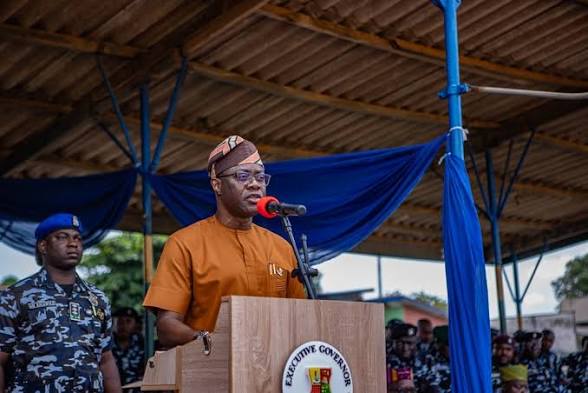
Eyinla made the projection during his keynote address at the Yiaga Africa 2027 Elections Scenarios and Election Manipulation Risk Index (EMRI) Retreat held in Abuja. His comments come shortly after Prof. Yakubu’s ten-year tenure as INEC Chairman ended on October 7, 2025.
Describing Nigeria’s elections as one of the largest peacetime civic operations in the world, Eyinla said the projected figure reflects the increasing financial, technological, and logistical demands of organizing elections in a nation with over 93 million registered voters, 176,846 polling units, and 1,558 constituencies.
He noted that the cost escalation is consistent with previous elections:
2015 elections – N109 billion (US$662 million)
2019 elections – N189 billion (US$619 million)
2023 elections – N355 billion (US$628 million)
Given the current economic climate, inflation, and the Consumer Price Index (CPI) from the National Bureau of Statistics (NBS), Eyinla said that conducting the 2027 polls may cost about US$600 million (N870 billion) — provided INEC ensures prudent resource management.
He further explained that Section 3(3) of the Electoral Act 2022 mandates that election funds be released at least one year before polling, meaning INEC’s budget must be distributed across the 2025, 2026, and 2027 fiscal years.
Eyinla emphasized the need for efficient financial planning to balance cost-effectiveness with electoral credibility, highlighting the continued reliance on technology such as the Bimodal Voter Accreditation System (BVAS), Automatic Finger Identification System (AFIS), and Automatic Biometric Identification System (ABIS).
He revealed that during the 2023 general elections, voter registration and accreditation devices accounted for around 35% of the total election budget, a figure expected to rise in 2027.
According to him, deploying election personnel and materials to over 200,000 polling locations, including remote, riverine, mountainous, and security-challenged areas, will require logistical coordination, supported by vehicles, boats, aircraft, and armed escorts provided by private and government partners.
Eyinla concluded by stressing that INEC must prioritize transparency and efficiency to safeguard election integrity amid rising operational costs and logistical complexities.