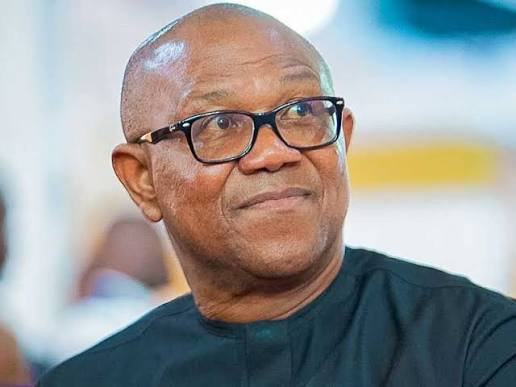
The distinguished economist Professor Adi Bongo highlights that the recent Nigeria’s economic growth in 2025 to 4.2% forecast by the World Bank comes with considerable social costs, including increasing poverty and diminishing public accountability.
It was reported that Professor Bongo evaluated the World Bank’s Africa’s Pulse report, which anticipates GDP growth rising from 4.1% in 2024 to 4.4% by 2026-2027, fueled by sectors such as ICT, finance, and real estate. He acknowledged governmental strides in reducing fiscal deficits and stabilizing the exchange rate but warned that the distributional consequences of these policies are often overlooked.
Similarly, Professor Bongo characterized Nigeria more as a “revenue-sharing democracy” than a true taxpaying democracy. In this setup, citizens who do not directly pay taxes have limited power to demand transparency. This contrasts with tax-based democracies where taxpayers expect accountability in return for their contributions.
Nigeria’s reliance on oil revenues and federally shared allocations reduces the pressure on leaders to be transparent. He referenced a recent interview with government officials who were unable to provide details on the per kilometer cost of infrastructure projects, underscoring how this opacity erodes public trust even amid tax reforms designed to increase revenue.
According to the World Bank, 139 million Nigerians now live below the poverty line, the highest figure in the country’s history. Thus, professor Bongo cautioned that the recent tax policies might exacerbate inequality.
Before 2023, Nigeria’s per capita income was about $2,000 in purchasing power parity terms but has decreased to roughly $800 following currency devaluation. Though the lowest income earners are exempt from tax up to ₦800,000 annually, middle-income earners face heavier tax burdens compared to their reduced earnings. For instance, the 15% tax bracket now starts at ₦3 million (about $1,700–$1,800), which is much lower than the previous threshold of over $6,000.
He emphasized that taxing lower incomes deepens poverty further and discourages investment because consumer spending power shrinks. Regarding social protection schemes like conditional cash transfers, Professor Bongo criticized them as insufficient and often politicized. He contrasted Nigeria’s program with Mexico’s Progresa and Brazil’s Bolsa Família, which tie payments to measurable results, such as school attendance. Nigeria’s transfers, averaging ₦25,000 ($15), have minimal effect on mitigating inflation.Despite these criticisms, Professor Bongo endorsed the government’s choice to borrow for Eurobond repayments rather than depleting Nigeria’s $42 billion reserves, seeing it as a sensible decision to maintain economic resilience and improve the country’s credit standing.
He noted the relative stabilization of the naira as a positive development. In closing, Professor Bongo called for Nigeria to transition to a genuine taxpaying democracy to empower citizens and hold the government accountable. While economic growth is positive, he underscored the need to focus on equitable distribution. As Nigeria’s economy grows under the Renewed Hope agenda, his warning highlights a crucial truth: without fundamental reforms in taxation and governance, growth may widen rather than narrow the gap between government optimism and the realities experienced by Nigerians.