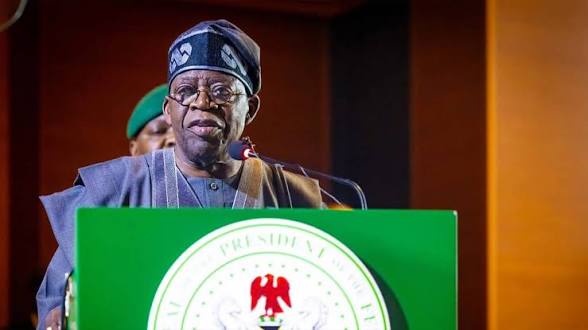
The House of Representatives has approved President Bola Tinubu’s request to secure a total of $2.35 billion in external borrowing to support the implementation of the 2025 Appropriation Act and refinance Nigeria’s maturing Eurobond.
The approval, granted during plenary on Wednesday, also includes authorization for the issuance of a $500 million debut sovereign Sukuk in the international capital market — a landmark step toward diversifying the nation’s financing instruments.
The decision followed the consideration of a report presented by the House Committee on Aids, Loans, and Debt Management, which endorsed the borrowing plan as aligned with the government’s 2025 fiscal framework. The approved facility comprises N1.84 trillion (approximately $1.23 billion) in new external loans to partially fund the N9.27 trillion budget deficit.
Breakdown of the Borrowing Plan
According to documents presented by the Executive, the $2.35 billion package includes:
$1.229 billion in new external borrowing to finance part of the 2025 budget deficit; and
$1.118 billion to refinance Nigeria’s existing Eurobond maturing in November 2025.
President Tinubu, in his earlier correspondence to the National Assembly, explained that the borrowing was made pursuant to Sections 21(1) and 27(1) of the Debt Management Office (Establishment, Etc.) Act, 2003, emphasizing that the loans would help the government avoid default, sustain market credibility, and maintain alignment with international best practices.
The President noted that the funds could be raised through several channels, including Eurobond issuance, bridge financing, loan syndication, or direct borrowing from international financial institutions. The final structure, he added, would depend on prevailing market conditions at the time of execution.
Debut International Sukuk Issuance
In a related development, the House also approved President Tinubu’s proposal to issue Nigeria’s first-ever international Sovereign Sukuk, valued at up to $500 million. The Islamic-compliant bond, which prohibits interest payments, will target investors in the global Sukuk market and fund key infrastructure projects.
Tinubu highlighted that domestic Sukuk issuances since 2017 have successfully raised over N1.39 trillion for roads and other infrastructure, demonstrating the instrument’s credibility. The international debut, he explained, aims to expand Nigeria’s investor base, deepen the sovereign securities market, and open new channels of financing.
Fiscal and Legal Implications
This development comes amid heightened scrutiny over Nigeria’s growing public debt, which policymakers argue remains sustainable under current fiscal ratios. Legal and financial analysts note that while the approval aligns with statutory provisions under the DMO Act, effective transparency and accountability in debt utilization will be critical to ensuring compliance with constitutional debt management safeguards.
The Federal Ministry of Finance and the Debt Management Office (DMO) are expected to collaborate with transaction advisers to secure the most favorable terms for the country.