The National Security Adviser (NSA) of Nigeria, Malam Nuhu Ribadu, on Monday, November 3rd, 2025, called an urgent meeting with the service chiefs and heads of security and intelligence agencies to deliberate on the recent threatening remarks made by U.S. President, Donald Trump, regarding possible military intervention in Nigeria. The high-stakes gathering took place at the National Counter Terrorism Centre (NCTC) in Abuja and was convened to scrutinize the potential impacts and strategic responses to Trump’s pointed accusations against the Nigerian government.
Top security sources revealed that the emergency meeting centered on assessing the consequences of Trump’s statement, which accused Nigeria of failing to protect its Christian population from Islamist militant attacks. Trump declared that the U.S. military was preparing to “act in Nigeria to tackle Islamist militancy,” a pronouncement that has generated significant concern within diplomatic and security circles both in Abuja and across West Africa.
A security insider disclosed that the meeting was focused on coordinating a unified response among Nigeria’s defence and intelligence sectors. This includes conducting impact assessments, contingency planning, and reinforcing Nigeria’s sovereignty in light of Trump’s military threat. The source explained, “The meeting is focused on impact assessment, contingency planning, and reinforcing Nigeria’s sovereignty in light of the statement attributed to the U.S. president.”
This development follows a series of exchanges marked by tension and mutual accusations. Trump criticized the Nigerian government for allegedly permitting the killing of Christians, stating, “If the Nigerian Government continues to allow the killing of Christians, the U.S.A. will immediately stop all aid and assistance to Nigeria, and may very well go into that now disgraced country, ‘guns-a-blazing,’ to completely wipe out the Islamic terrorists who are committing these horrible atrocities.”
He further reinforced this by instructing the U.S. Department of War “to prepare for possible action” and warned, “If we attack, it will be fast, vicious, and sweet, just like the terrorist thugs attack our CHERISHED Christians.”
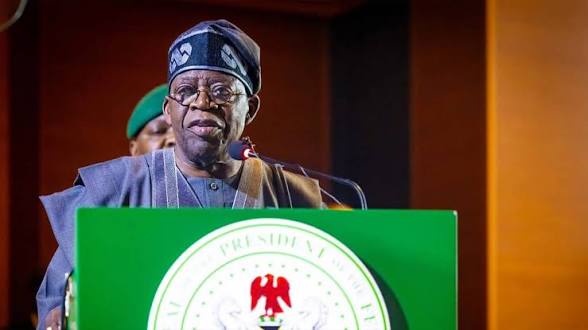
In response, President Bola Tinubu firmly denied Trump’s allegations, underscoring Nigeria’s constitutional guarantees protecting religious rights and equality for all citizens regardless of faith. He insisted, “Since 2023, our administration has maintained an open and active engagement with Christian and Muslim leaders alike and continues to address security challenges which affect citizens across faiths and regions.”
President Tinubu described Trump’s accusations as a “mischaracterisation of Nigeria’s religious landscape,” emphasizing that such claims overlook the country’s diversity and ongoing government efforts to foster peaceful coexistence.
The President stated, “The characterisation of Nigeria as religiously intolerant does not reflect our national reality, nor does it take into consideration the consistent and sincere efforts of the government to safeguard freedom of religion and beliefs for all Nigerians.”
He also reaffirmed that “Religious freedom and tolerance have been a core tenet of our collective identity and shall always remain so. Nigeria opposes religious persecution and does not encourage it.”
He added, “Nigeria is a country with constitutional guarantees to protect citizens of all faiths,” and noted the administration’s commitment to working with the United States and international community to deepen cooperation on protecting all communities.
Despite these assurances from the Nigerian government, Trump doubled down on his stance during a press briefing aboard Air Force One, indicating that military options remain on the table.
In tandem with these developments, Daniel Bwala, an aide to President Tinubu, asserted that no U.S. military action could legally occur in Nigeria without the explicit approval of the Nigerian President, reinforcing the country’s sovereignty and control over any foreign military presence.
Following the emergency meeting, the Office of the National Security Adviser is expected to issue a formal statement delineating Nigeria’s national security posture and forthcoming measures to safeguard the country’s sovereignty amid escalating international attention. The meeting underscores Nigeria’s resolve to address external threats diplomatically while maintaining territorial integrity and religious harmony within its borders.