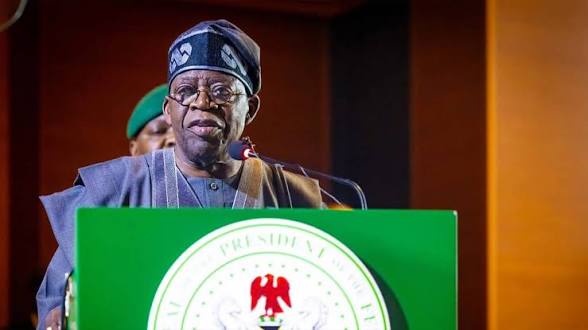
Human rights activist and former presidential candidate, Omoyele Sowore, has alleged that the administration of President Bola Ahmed Tinubu has reached a secret understanding with the judiciary to ensure that Nnamdi Kanu, leader of the Indigenous People of Biafra (IPOB), is either sentenced to death or condemned to life imprisonment.
In a statement on Wednesday, Sowore described the ongoing trial of Kanu as “a political charade designed to give legal cover to a pre-determined outcome.”
“For the avoidance of doubt and to alert the public, it has become clear that a secret decision has long been reached within the Tinubu regime regarding the fate of Nnamdi Kanu. The plan, devised through a high-level political conspiracy, is to either sentence him to death or condemn him to life imprisonment. This outcome, predetermined far in advance, is now being dressed up in the guise of judicial procedure,” Sowore stated.
He claimed that Justice Omotosho, who is presiding over Kanu’s case at the Federal High Court in Abuja, may interpret Kanu’s refusal to open his defence as an admission of guilt, paving the way for the alleged pre-arranged judgment.
“Justice Omotosho is expected to conclude Kanu’s trial by declaring that his refusal to open his defence amounts to an admission of guilt — a convenient interpretation designed to seal a verdict already agreed upon behind closed doors,” he added.
Sowore warned that the expected ruling, anticipated this November, could echo one of the darkest chapters in Nigeria’s judicial history — the 1995 execution of environmental activist Ken Saro-Wiwa and eight other Ogoni leaders under the regime of General Sani Abacha.
“It was in November 1995 that the military tribunal of General Sani Abacha sentenced Ken Saro-Wiwa and eight other Ogoni activists to death — a sentence carried out with ruthless precision. Today, three decades later, Nigeria stands at the same moral crossroads. Only the year has changed — this is 2025, not 1995 — but the machinery of repression grinds on,” Sowore said.
He further stressed that Kanu’s trial has ceased to be a quest for justice, calling it “a test of conscience for the Nigerian state and its citizens alike.”
Meanwhile, at the Federal High Court on Tuesday, Justice Omotosho gave Kanu until Wednesday, November 5, to open his defence in the terrorism case or forfeit his right to do so.
The directive came after Kanu, who is representing himself, again refused to begin his defence following the prosecution’s closure of its case and the dismissal of his no-case submission.
Justice Omotosho, acknowledging Kanu’s lack of legal representation, permitted him time to seek legal counsel but maintained that failure to proceed would be interpreted as a voluntary waiver of his right.
The court is expected to determine the next steps in Kanu’s trial later this month.