The United States military has formulated a set of contingency plans for potential intervention in Nigeria in response to a directive from President Donald Trump, who accused the Nigerian government of permitting the “mass slaughter” of Christians—a claim vehemently denied by Nigerian officials.
According to a New York Times report and other sources, the U.S. Africa Command recently submitted three tiers of military options—heavy, medium, and light—to the Department of War, as requested by U.S. Defense Secretary Pete Hegseth. Each option is designed to allow for controlled escalation depending on the evolving situation in Nigeria.
The heavy option represents the most forceful military response. It envisages deploying an aircraft carrier group to the Gulf of Guinea off the Nigerian coast, accompanied by fighter jets or long-range bombers conducting airstrikes targeting militant strongholds deep within northern Nigeria. However, military officials cautioned about logistical challenges, noting limited availability of aircraft carriers and competing priorities such as President Trump’s anti-drug cartel operations in the Caribbean.
The medium option involves the use of drone strikes against militant camps, bases, convoys, and vehicles in Nigeria’s volatile northern region. The U.S. possesses Predator and Reaper drones capable of loitering for hours to gather intelligence and launch precise strikes. Yet, the absence of nearby drone bases following U.S. withdrawal from facilities in Niger complicates this plan.
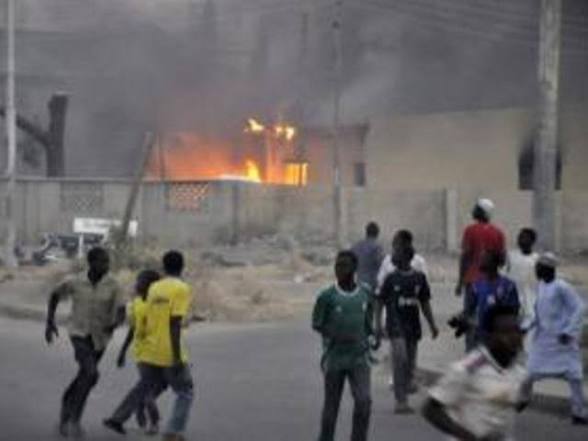
The light option focuses on partner-enabled operations where the U.S. military and State Department would support Nigerian government forces in targeting Boko Haram, ISWAP, and other Islamist insurgents responsible for decades of violence, kidnappings, and civilian killings. However, this option suffers from the loss of critical support as the United States Agency for International Development (USAID) has been suspended and its Abuja office closed by the Trump administration earlier this year.
The primary objective declared by U.S. officials is to halt Islamist militant attacks in northern Nigeria, protect Christians from armed violence, and end the long-standing insurgency. President Trump has designated Nigeria a Country of Particular Concern (CPC) and suspended arms sales and technical assistance, escalating tensions further. He warned that any U.S. military action would be “fast, vicious, and sweet,” emphasizing the existential threat he claims Christianity faces in Nigeria.
Despite these bold plans and warnings, U.S. military experts express skepticism about the viability of a swift resolution. The region’s violence is deeply complex, rooted not only in religious divisions but also intertwined with ethnic, cultural, and land ownership conflicts, especially in Middle Belt Nigeria. Boko Haram and allied groups have targeted both Muslim and Christian communities indiscriminately, with attacks such as mosque bombings causing significant Muslim casualties in recent years.
Therefore, Paul Eaton, a retired Army veteran who fought in Iraq, described the potential U.S. action as a “fiasco” unless the U.S. commits to a massive, prolonged campaign similar to Iraq or Afghanistan, which few consider practical. He compared heavy bomber strikes to “pounding a pillow” likely to cause shock but not resolve the conflict.
Further challenges include limited U.S. carrier availability, distance from drone launch sites, and the complexities of cooperating with Nigerian forces under strained diplomatic circumstances. The dissolution of USAID further hampers civil and humanitarian support efforts that often aid military objectives.
In sum, the U.S. military’s contingency plans illustrate options ranging from direct high-intensity strikes to supportive partnership actions, reflecting the difficult balance between strategic limitations and political demands following President Trump’s public declarations on Nigeria’s security situation.The Nigerian government continues to reject allegations of religious genocide, emphasizing that the violence is part of broader regional and communal conflicts. As the Pentagon reviews these proposed courses of action, concern grows over the potential consequences of U.S. military involvement in one of Africa’s most populous nations.