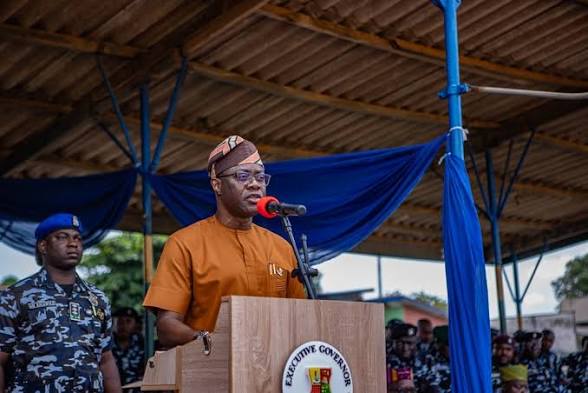
The administration of Governor Seyi Makinde in Oyo State has borrowed approximately ₦219 billion between January and September 2025, according to an official budget performance report reviewed by Legal Observer New.
The document indicates that ₦219.968 billion was raised within the nine-month period — almost entirely (₦219.963 billion) from domestic sources — while the state’s internally generated revenue (IGR) for the same period stood at ₦63 billion. During this time, the government spent ₦25 billion on public debt servicing.
This development has sparked growing concern over the state’s rising debt profile and its prioritisation of projects amidst worsening economic hardship and protests by residents
Extravagant Government House Overhaul Overshadows Health Spending
In June, the Oyo State Executive Council approved a controversial ₦63.4 billion contract to overhaul the Government House in Ibadan.
According to Commissioner for Information and Orientation, Dotun Oyelade, the decision was justified on the grounds that the Government House had become “an embarrassing and unbefitting facility,” forcing both the Governor and his deputy to live in their personal homes for six years.
However, a review of the 2025 approved budget shows that the amount allocated for the renovation exceeds the ₦59.4 billion earmarked for the entire Ministry of Health — raising questions about the administration’s priorities amid deep poverty indicators.
Budget analysis reveals that the renovation funds could alternatively provide:
12,680 boreholes (at ₦5 million each),
31,700 toilet facilities (at ₦2 million each), or
1,540 rehabilitated health centres (based on the ₦822 million budgeted for 20 centres).
Data from the National Bureau of Statistics (NBS) further shows that 57% of Oyo households lack access to clean water, while 79% lack adequate sanitary facilities, underscoring the state’s pressing infrastructural deficits.
In August, controversy deepened when Hon. Shittu Ibraheem, a member representing Saki West constituency in the Oyo State House of Assembly, alleged that the executive arm secured a ₦300 billion loan without proper legislative procedure.
According to Ibraheem, the loan was approved during an emergency sitting held while the House was on a six-week recess, from July 31 to September 16, 2025.
“I want it on record that I did not participate in the approval of the ₦300 billion loan allegedly perfected on August 26,” the lawmaker stated, describing the process as irregular and opaque.
He further questioned the rationale behind additional borrowing at a time when federal allocations to states have significantly increased:
“Oyo now receives about a 500% increase in FAAC. Why take another loan? Why was the sitting not communicated to all members?”
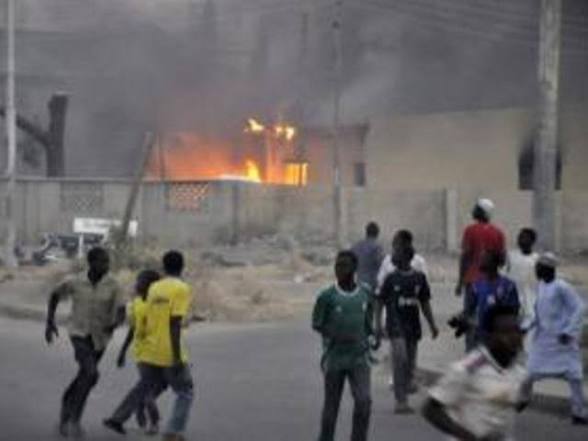
As the debt profile expands, citizens’ frustrations continue to grow. On Monday, protesters, including members of the African Action Congress (AAC), marched through Ibadan to denounce what they termed “Governor Makinde’s land-grabbing scheme” disguised as an expansion of the Ibadan Circular Road project.
The demonstrators accused the government of attempting to seize an additional 500 metres of land on both sides of the existing corridor — beyond the 150 metres earlier acquired.
One protester said: “There’s nowhere in the world a road corridor is up to that width. The 150 metres already taken is more than enough. This 500-metre extension is just a land grab.”
In a statement signed by Kayode Babayomi David, AAC’s state chairman, the party condemned the expansion, alleging that the government planned to resell confiscated land to political cronies.
“We stand in solidarity with victims of Makinde’s land-grabbing spree. This deceitful act of taking 500 more metres under the guise of corridor extension must be resisted,” the AAC said.
The party vowed to mobilise residents, civil society groups, and traders to “occupy Ibadan” until the proposed demolition and expansion plans are halted.
Observers have raised alarm over the state’s growing debt dependency despite its rising revenue streams. Fiscal analysts warn that the current trend may erode public confidence, strain future budgets, and limit resources for essential services such as health, education, and rural development.
As the Oyo State Government continues to justify its borrowing and infrastructural projects, pressure is mounting for transparency, accountability, and a clear fiscal roadmap — especially as citizens face worsening living conditions and economic uncertainty