In a decisive move that underscores Nigeria’s commitment to sovereignty and internal security, the Nigerian government has rejected any proposal of US troop deployment following inflammatory remarks by United States President Donald Trump. Trump’s statements—claiming Christian genocide and threatening “guns-a-blazing” military intervention—have not only drawn international scrutiny but have also prompted strong responses from Nigerian officials and faith leaders.
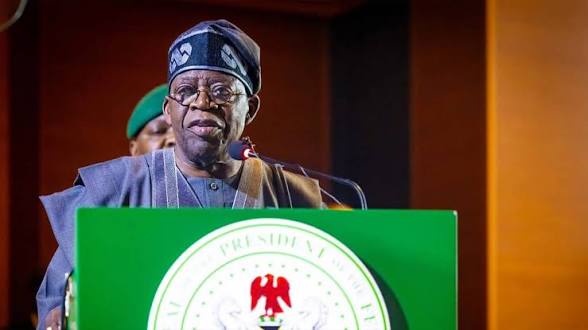
President Bola Ahmed Tinubu, in a press briefing, dispelled suggestions of “Christian genocide” in Nigeria, asserting, “Nigeria welcomes partnership with any nation against terrorism, but our sovereignty and the rights of all our citizens must be respected. Violence in Nigeria affects all communities, and our constitution guarantees religious freedom.” Tinubu affirmed that cooperation with the US on counter-terrorism would continue through established channels, primarily via intelligence sharing and training, but insisted on the need for accuracy and respect in global narratives.
Senator George Akume, speaking for the presidency, called Trump’s threat “a negotiating tactic, not policy,” and urged Washington to avoid exacerbating religious divisions through unsubstantiated claims. “Our country already works closely with the United States in fighting insurgents, but portraying the situation as a ‘Christian genocide’ only inflames tension and undermines the shared effort against terror groups like Boko Haram and ISWAP,” he said.
Security experts echoed the government’s stance, reminding the public that the majority of violent incidents in Nigeria impact diverse communities, not just Christian groups. According to data from ACLED (Armed Conflict Location and Event Data Project), less than 2.5% of the 1,923 civilian-targeted attacks in Nigeria this year were identified as primarily religiously motivated.
Twelve northern states operate Sharia law for civil matters, although this coexists—sometimes controversially—with Nigeria’s secular constitutional guarantees.
Trump’s statements, which included threats of airstrikes and aid suspension, were perceived by many as political rhetoric aimed at domestic American audiences. Major General Paul D. Eaton (ret.) commented, “Any US strikes would be futile—like pounding a pillow. The public in both countries knows this isn’t a prelude to large-scale intervention.” US defense officials confirmed that, while contingency plans exist, logistical and diplomatic obstacles make actual operations unlikely.
Faith leaders, including the Christian Association of Nigeria (CAN) and prominent imams, jointly condemned the escalation of religious narratives. “We reject the framing of our country’s crisis as religious war. We plead with the international community to support peace, not division,” CAN President Archbishop Daniel Okoh said.
Nigeria reaffirmed its position at the United Nations, referencing the UN Charter’s prohibition on the use of force inside sovereign states without consent or Security Council approval. “Nigeria has not invited US troops. We continue to handle our own counter-terrorism operations, with assistance limited to training and equipment,” an official statement clarified.
The events demonstrate the fine balance Nigeria maintains between accepting foreign support and asserting its autonomy against divisive and exaggerated external narratives. While the US has designated Nigeria a “Country of Particular Concern” regarding religious freedom, such status previously allowed only diplomatic measures. Analysts caution that misrepresentation of Nigeria’s security challenges, sometimes amplified by American conservative circles, risks undermining both regional stability and international cooperation.
As tensions simmer, the Nigerian government remains unequivocal: “No foreign boots on Nigerian soil,” and insists that addressing violence and terrorism must begin with local solutions, not external intervention.