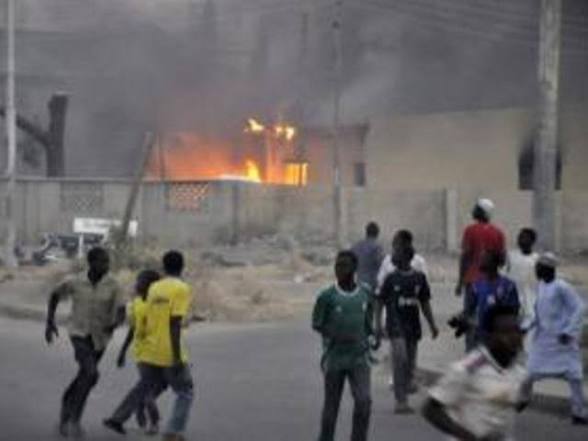
United States Congressman Riley Moore has issued a strong denunciation of the latest mass abduction in Nigeria, describing the attack on St. Mary’s Catholic School in Papiri, Niger State, as part of a broader pattern of escalating insecurity that demands urgent international intervention.
The lawmaker, a vocal critic of Nigeria’s security record, said the kidnapping of over 50 students and teachers represents a continuation of what he alleges to be targeted violence against Christian communities. Writing on X, Moore stated: “Enough is enough. We must do everything we can to defend our brothers and sisters.”
A Growing Humanitarian and Legal Crisis
Local authorities in Agwara Local Government Area confirmed the Friday morning attack, with early reports indicating that dozens—possibly over 100—students and staff were taken by armed groups.
Officials including Ahmed Abdullahi Rofia, Head of Disaster and Relief, and Bello Gidi, media aide to the LGA chairman, verified the incident.
Although the exact number of abductees is yet to be established, community witnesses told LegalObserver that “more than a dozen” children were seized, amid conflicting figures circulating within the area.
The attack comes just days after a similar incident in Kebbi State, where 25 female students were abducted. Analysts say the repeated targeting of schools violates both domestic law and Nigeria’s obligations under international conventions protecting children in conflict settings.
Pattern of Attacks Raises Larger Security Failures
The Legalobserver also documents a parallel attack in Rogun Village, Kwara State, where armed assailants killed two security operatives after storming a police outpost.
These incidents highlight persistent gaps in intelligence gathering, rural policing, and the protection of educational institutions—areas repeatedly flagged by security experts as urgent priorities for government reform.
Under Section 14(2)(b) of the Nigerian Constitution, the state bears the primary responsibility for ensuring the security and welfare of its citizens. Legal observers argue that the recurring nature of these attacks raises questions about the adequacy of Nigeria’s counterterrorism and banditry responses.
Moore Pushes for Renewed U.S. Pressure on Nigeria
Congressman Moore has positioned himself as one of the most outspoken American legislators on Nigeria’s security crisis.
In previous congressional submissions, he described Nigeria as “the deadliest place in the world to be a Christian” and called for the U.S. to redesignate Nigeria as a Country of Particular Concern (CPC)—a classification reserved for states that permit or fail to prevent severe violations of religious freedom.
Moore cites data claiming that more than 7,000 Christians were killed in Nigeria in 2025 alone, and that tens of thousands have been killed since 2009. His proposed congressional resolution urges the United States to use diplomatic, economic, humanitarian, and security tools to pressure Nigerian authorities to safeguard vulnerable communities.
A Contested Narrative
While Moore’s framing has gained significant support among faith-based coalitions in the U.S., his use of the term “genocide” remains controversial among some analysts.
Experts caution that Nigeria’s violence is multifaceted—rooted in terrorism, banditry, ethnic tensions, climate-related displacement, and inadequate governance—and not exclusively religious in nature.
The Nigerian government, for its part, has continued to dispute the genocide label, insisting that attacks are indiscriminate and driven by criminality rather than religious persecution.
International and Domestic Legal Implications
The recurring abductions raise serious legal concerns:
Violation of the Child Rights Act and Safe Schools Declaration, to which Nigeria is a signatory.
Potential crimes under international humanitarian law, given the targeting of non-combatants.
Regional security threats, as armed groups exploit weak border and rural policing systems.
Human-rights advocates argue that unless Nigeria adopts a more coordinated security doctrine—with emphasis on intelligence, community protection, and justice sector reforms—international pressure may intensify.
For now, the Papiri abduction has once again placed global attention on Nigeria’s internal security challenges, with calls growing for a more decisive and transparent government response.