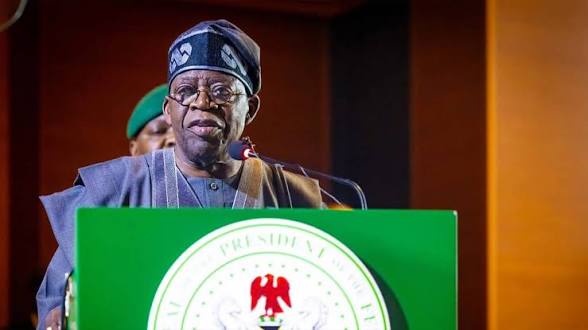
President Bola Ahmed Tinubu has formally submitted a new list of 32 ambassadorial nominees to the Senate, marking his first major round of diplomatic appointments since the recall of all Nigerian envoys in 2023. The move, expected to restore full diplomatic representation after a two-year vacuum, immediately ignited political controversy as opposition parties challenged both the composition and timing of the nominations.
The fresh list, which brings the total number of nominees to 35 after earlier submissions, includes 15 career diplomats and 17 non-career appointees. Among those selected are several prominent political figures such as former presidential aide Reno Omokri, former INEC Chairman Mahmood Yakubu, former governors Ifeanyi Ugwuanyi and Okezie Ikpeazu, former Lagos deputy governor Femi Pedro, and former ministers including Femi Fani-Kayode. Career diplomats drawn from various states are expected to be deployed to Nigeria’s missions in strategic countries, including China, India, South Korea, Canada, the UAE, South Africa, and several global multilateral bodies.
The release of the list follows prolonged delays that began in September 2023, when President Tinubu ordered a sweeping recall of all ambassadors to reassess Nigeria’s foreign policy direction. Even though vetting for a number of nominees was completed months ago, internal reviews and last-minute complications stalled the process. Some early nominees became ineligible or passed away, prompting a full revision. In November, the Presidency indicated that the appointment rollout would be done in phases, beginning with envoys posted to major global capitals.
The political response to the nominations was swift. The Peoples Democratic Party, African Democratic Congress, and New Nigeria Peoples Party strongly criticised the list, describing it as an exercise shaped by political debts and questionable reward systems. The PDP argued that the calibre of several nominees suggested a decline in governance standards and accused the President of selecting individuals whose public service records might damage Nigeria’s international image. The party’s spokesperson, Ini Ememobong, stated that appointing individuals with controversial reputations, especially at a time when the country is attempting to strengthen diplomatic credibility, sends a troubling message about the administration’s priorities.
A central point of contention is the nomination of Mahmood Yakubu, who concluded his tenure as INEC Chairman just weeks ago. The PDP and NNPP noted that many Nigerians still view the last electoral cycle, which Yakubu supervised, with dissatisfaction. They warned that the appointment risks being perceived as a political reward, suggesting that controversial office holders can be compensated with postings that grant diplomatic immunity. The ADC added that the long delay preceding the appointments further undermines the credibility of the list, dismissing it as an attempt to settle political debts rather than strengthen Nigeria’s diplomatic corps.
On the other hand, the ruling All Progressives Congress dismissed all criticisms as baseless. The APC’s National Publicity Director, Bala Ibrahim, argued that the opposition was attacking the nominees out of political frustration rather than principle. He questioned why a former INEC chairman should be disqualified from further national service, pointing out that past electoral chiefs such as Prof. Attahiru Jega also took up government assignments after leaving office. According to the APC, Yakubu’s nomination reflects a recognition of service rather than political favour, and critics are unfairly attempting to discredit the President’s constitutional prerogative.
Beyond the political back-and-forth, the situation raises broader governance concerns. Nigeria’s foreign missions have operated without substantive ambassadors for two years, an unusual and diplomatically costly gap that has affected bilateral engagements, consular services, and the country’s general visibility abroad. The tension between presidential discretion and public expectations of merit-based appointments remains a significant issue, especially as Nigeria seeks to reassert itself in global affairs. Questions also persist about the balance between career diplomats and political appointees, a debate that has recurred across multiple administrations.
The nominees will undergo Senate screening in the coming weeks. Only after confirmation will the Presidency reveal each nominee’s specific posting, followed by requests for agrément from the respective host countries. For high-profile diplomatic capitals such as Washington, London, and Beijing, the approval process may extend well into the coming year, whereas missions within Africa are expected to receive quicker clearance.