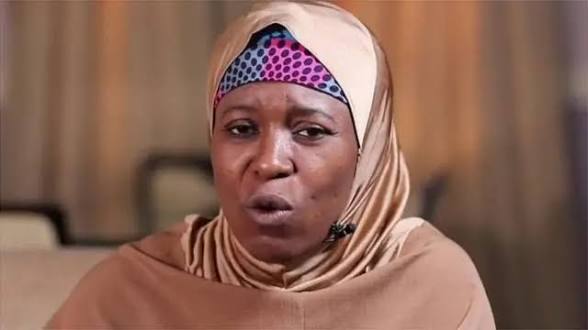
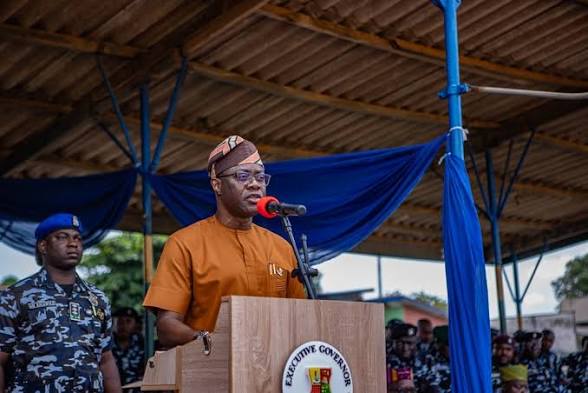
The Local contractors under the All Indigenous Contractors Association of Nigeria (AICAN) have accused President Bola Tinubu’s administration of refusing to pay over ₦4 trillion allegedly owed for federal capital projects executed in the 2024 budget year. They say that, despite repeated assurances from top government officials, thousands of verified contractors are yet to receive payment for completed jobs.
In interviews, several contractors lamented that multiple meetings with the Minister of Finance and Coordinating Minister of the Economy, Wale Edun, have not produced any concrete results. One contractor said, “Despite all the meetings we have had with the Finance Minister nothing has happened,” insisting that government officials keep making promises that are never fulfilled. The contractors argue that this failure is particularly alarming given reports of strong government revenues and high‑profile spending at the federal level, which, in their view, shows that contractors’ debts are simply not being prioritised.
The dispute dates back to September, when the contractors staged a major protest at the Ministry of Finance headquarters in Abuja, blocking entrances and demanding payment for 2024 capital projects they say are fully completed and certified. During that demonstration, AICAN Secretary Babatunde Seun recalled that the group had earlier met with the Accountant‑General of the Federation, Shamseldeen Ogunjimi, and Minister Edun over the arrears, but “nothing has materialised.” According to him, “Out of 5,000 people that we are expecting, we only had five people from our platform that received the money.”
Seun vowed that the contractors would remain on the streets until all verified payments are made. “Until they pay every one of our members, we will not leave the streets. We will continue to stay here. If it takes us till December, we will continue to stay here. They will not work if they continue to keep us this way. We can’t take it anymore,” he said.
He painted a grim picture of the consequences of the non‑payment: “We have run out of business. We’ve run out of cash. We’ve run out of everything. School is opening next week. Most of our children are in school. Even in the last term, we couldn’t pay school fees. Is that how we are going to continue? We can’t.”
The contractors argue that all projects for which they are seeking payment have been completed, handed over and backed by official completion certificates, and maintain that any incomplete jobs can be left out of the settlement. “All our jobs have been done, completed, handed over with a certificate that we have finished the job. The one that they have not finished, don’t pay. The one they have finished, we are here to tell them, please, pay,” Seun stressed.
Their grievances spilled into the political arena on 4 November, when protests by the contractors at the National Assembly complex forced the House of Representatives to suspend plenary for one week. The decision followed a motion of urgent national importance moved by Minority Leader Kingsley Chinda, who described the situation as the “dire plight” of local contractors owed for 2024 projects. Chinda reminded lawmakers that President Tinubu had earlier directed the Ministers of Finance and Budget to immediately pay local contractors, but said the directive had not been implemented.
“You recall that our local contractors; our brothers and sisters, besieged the National Assembly today, protesting that they have not been paid for jobs completed under the 2024 budget,” Chinda told his colleagues, adding, “This non‑payment has caused untold hardship to our people, and it is our duty as a Parliament to take a stand.”
The contractors’ anger has been further fuelled by revelations from the federal government’s public payments portal, Govspend, which show heavy spending by the State House on vehicles and foreign exchange in 2024. Documents cited by the protesters indicate that between August 18 and September 9, 2024, the Presidency spent about ₦5.1 billion on new cars alone. On 18 August, the State House reportedly paid ₦3.4 billion for 16 Toyota Prado 2023/2024 models for use in Abuja, implying a unit cost of about ₦212 million per vehicle. On 9 September, the State House allegedly spent another ₦1.7 billion to buy 10 Toyota Camry V4 2023 models.
Further reviews of Govspend records show that between March and May 2024, the Tinubu Presidency, under the “State House” tag, spent about ₦9.2 billion on vehicles. In addition, on 17 July 2024, the State House reportedly spent a combined ₦1.562 billion on several foreign‑exchange purchases, including separate transactions of ₦149.047 million, ₦358.527 million, ₦243.322 million, ₦739.074 million and ₦73.070 million.
For the aggrieved contractors, these figures are evidence that the federal government has the capacity to clear their arrears but has chosen other spending priorities. They insist that until the outstanding ₦4 trillion is paid, they will continue to occupy key government buildings and disrupt normal operations, arguing that the survival of their businesses and families now depends on the government honouring its contractual obligations.