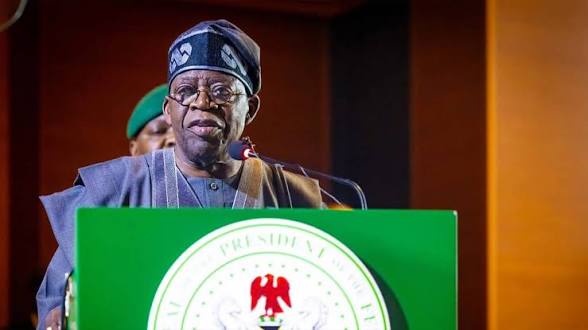
President Bola Ahmed Tinubu is reportedly set to appoint former Chief of Defence Staff, General Christopher Musa (rtd.), as Nigeria’s new Minister of Defence, in what insiders describe as a major shake-up of the country’s security leadership.
The move follows recent changes in the military high command and is seen as part of efforts to recalibrate the nation’s response to terrorism, banditry, and other security threats.
According to the report, Musa is being considered to replace Mohammed Badaru Abubakar, who has overseen the Defence Ministry during a period of persistent insecurity and mounting public criticism. The planned transition comes on the heels of Tinubu’s October reshuffle, in which General Olufemi Oluyede was appointed Chief of Defence Staff to succeed Musa, alongside new chiefs for the army, navy, and air force. The President was said to have assured Nigerians that the reconfiguration of the military hierarchy was aimed at “strengthening the national security architecture” and demanding “professionalism, vigilance and comradeship” from the armed forces.
Presidency sources quoted in the report said Tinubu now wants to leverage Musa’s extensive operational experience in the North-East and other conflict zones by putting him in charge of the civilian-led Defence Ministry. Supporters argue that his first-hand knowledge of theatre operations, troop morale, and inter-service coordination could help bridge the traditional gap between the Ministry and the military high command, and improve execution of presidential directives on security.
However, the prospect of bringing a recently replaced service chief straight into the political leadership of the ministry has already raised concerns among some analysts and opposition voices. Critics fear that appointing a retired CDS so soon after he left uniform could blur the line between civilian oversight and military command, and reinforce a culture where policy is heavily dominated by ex-service chiefs. Others question whether a change of personality at the top, without deeper institutional reforms and better funding, will be enough to reverse Nigeria’s worsening insecurity.
If Tinubu proceeds with the appointment and the Senate confirms it, Musa would become the second Defence Minister of the administration, symbolising both the pressure on the government to show stronger results on security and the President’s preference for relying on familiar military hands in key security positions. The development is likely to dominate public and parliamentary debate in the coming days as Nigerians weigh whether the reshuffle represents a fresh start or simply a recycling of the old guard in new roles.