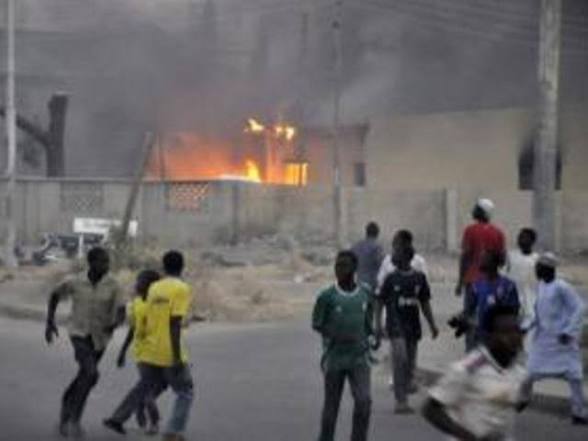
The United States government has unveiled a new visa restriction policy targeting Nigerians believed to be involved in religiously motivated violence and other grave attacks, in what Washington describes as a decisive step to hold perpetrators accountable. The measure, announced by the US Department of State, is aimed at individuals and groups linked to killings, assaults and intimidation of Christians and other religious communities in different parts of Nigeria.
According to the State Department, the restrictions are being applied under Section 212(a)(3)(C) of the US Immigration and Nationality Act, which allows Washington to deny entry to foreign nationals who have “directed, authorised, significantly supported, participated in, or carried out violations of religious freedom,” and, where appropriate, extend those sanctions to their immediate family members.
US officials stressed that the move is part of a broader push to confront what they describe as “egregious anti‑Christian violence” and systematic violations of religious freedom in the country.
They linked the announcement to recent hearings in the US Congress and briefings by lawmakers who have warned that violence against Christians in Nigeria shows clear patterns of targeted attacks rather than random insecurity.
Lawmakers and religious freedom advocates at those sessions called for tougher tools, including visa bans and potential financial sanctions, to pressure both non‑state groups and any officials seen as failing to prevent or punish abuses.
In a statement cited by US media, officials cautioned that Washington “cannot stand by while such atrocities are happening in Nigeria,” adding that the visa policy could be widened to cover other individuals or entities credibly implicated in serious human rights or religious‑freedom violations.
They also signalled that the measure is intended to complement ongoing security and diplomatic engagement with Abuja, including a newly formed US–Nigeria working group focused on terrorism, banditry and protection of vulnerable communities.
The Nigerian government has often argued that much of the violence is driven by banditry, land disputes and broader socio‑economic tensions rather than religion, but critics in Washington say religious identity has increasingly become a central fault line in many of the worst attacks.
With the new visa bans, the United States is sending a signal that individuals linked to such violence may face personal international consequences, even if they are never prosecuted at home.