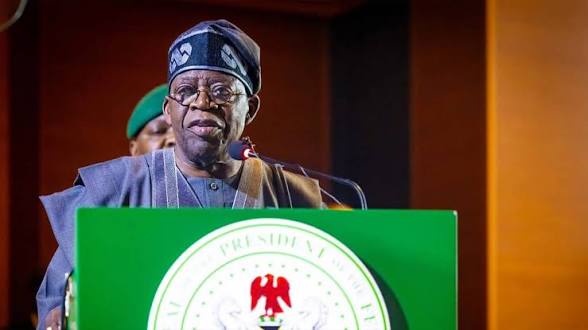
President Bola Tinubu has made a direct appeal to the House of Representatives to expedite the re-enactment of the 2025 budget, totaling ₦43.56 trillion, which he dubbed the “Budget of Restoration.” In a letter read on the floor of the Green Chamber on Wednesday, the President emphasized the urgency of the move to sustain ongoing federal projects and address Nigeria’s mounting economic challenges, including inflation and infrastructure deficits.
The request comes just days before the year-end, as the National Assembly races against time to align fiscal plans with the administration’s Renewed Hope Agenda. Speaker Tajudeen Abbas, who presented the President’s letter during plenary, assured lawmakers of a prompt consideration, signaling potential bipartisan support amid criticisms of the budget’s size and deficit financing.
Tinubu’s letter, dated December 16, 2025, and addressed to Abbas, explicitly seeks “the National Assembly’s approval for the re-enactment of the 2025 Appropriation Act.” He argued that the re-enactment is “imperative to sustain the implementation of capital projects and other programmes outlined in the Budget,” warning that delays could derail key initiatives in critical sectors like security, education, healthcare, and infrastructure.
The ₦43.56 trillion budget, originally passed in early 2025, allocates ₦23.6 trillion to capital expenditure—marking a significant push toward infrastructure development—while statutory transfers stand at ₦1.32 trillion, debt service at ₦13.44 trillion, and recurrent spending at ₦5.2 trillion. A whopping ₦15.7 trillion is earmarked for deficit financing, primarily through domestic and foreign borrowing, a figure that has drawn scrutiny from fiscal conservatives and civil society groups over Nigeria’s rising debt profile, now exceeding ₦120 trillion according to recent Debt Management Office data.
The President’s push for re-enactment follows a Supreme Court ruling earlier this year that struck down certain provisions in the budget, necessitating legislative tweaks to ensure compliance. This isn’t the first such request; Tinubu had previously sought supplementary appropriations, but the re-enactment aims to consolidate expenditures into a single, streamlined framework for 2026 planning.
In his letter, Tinubu highlighted the budget’s alignment with national priorities: “The re-enactment will enable the continued funding of ongoing projects, enhance service delivery, and support economic recovery efforts.” He added, “This is crucial for maintaining fiscal stability and fulfilling our promises to the Nigerian people under the Renewed Hope Agenda.”Lawmakers’ Response and Political Dynamics
Speaker Abbas, responding during plenary, praised the President’s proactive engagement. “The House will give this request the expeditious attention it deserves,” Abbas stated, underscoring the legislature’s commitment to collaborative governance. Majority Leader Julius Ihonvbere echoed this, noting that the budget’s re-enactment would “prevent funding gaps that could halt critical projects nationwide.”
However, not all reactions were unanimous. Minority Leader Kingsley Chinda (PDP) raised concerns over the deficit’s sustainability, questioning, “While we support restoration, we must interrogate how this borrowing will not burden future generations.” PDP lawmakers have historically criticized the budget for underfunding social services, with allocations to education at just 7.9% and health at 4.7%, below UNESCO and WHO benchmarks.The request arrives against a backdrop of economic headwinds: Nigeria’s inflation rate hovers at 34.6% (per National Bureau of Statistics, December 2025), naira volatility persists, and oil revenues—expected at ₦12.4 trillion—face risks from global price fluctuations. Analysts view the re-enactment as a pragmatic step to roll over unspent funds, potentially averting a government shutdown scenario seen in prior years.Broader Implications for Governance
Legal experts, including those versed in Nigeria’s Constitution (Sections 80-88 on appropriation), note that re-enactment requires fresh legislative approval under the same processes as initial passage: second reading, committee scrutiny, and third reading. Failure to act by December 31 could trigger cash-backing crises for Ministries, Departments, and Agencies (MDAs), stalling payments for ongoing contracts.Civil society reactions were swift. The Budget Action Network warned that “without rigorous oversight, this could entrench a cycle of deficits,” while the Nigerian Economic Summit Group hailed it as “a necessary bridge to 2026 reforms.” As the House Constitution Review Committee deliberates, the budget’s fate could influence Tinubu’s mid-term political capital ahead of 2027 elections.
The full letter and budget documents are available on the National Assembly portal. Lawmakers are scheduled to reconvene next week for debates.