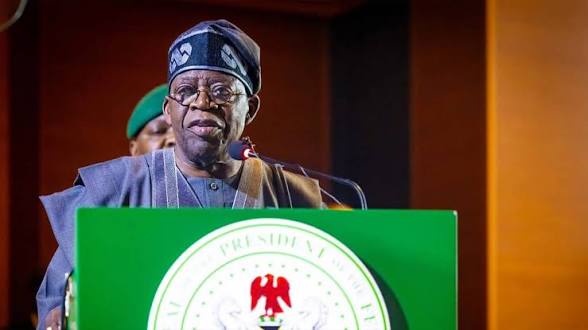
President Bola Tinubu has nominated new heads for Nigeria’s key petroleum regulatory agencies following the resignation of the Chief Executives of the Nigerian Midstream and Downstream Petroleum Regulatory Authority (NMDPRA), Farouk Ahmed, and the Nigerian Upstream Petroleum Regulatory Commission (NUPRC), Gbenga Komolafe.
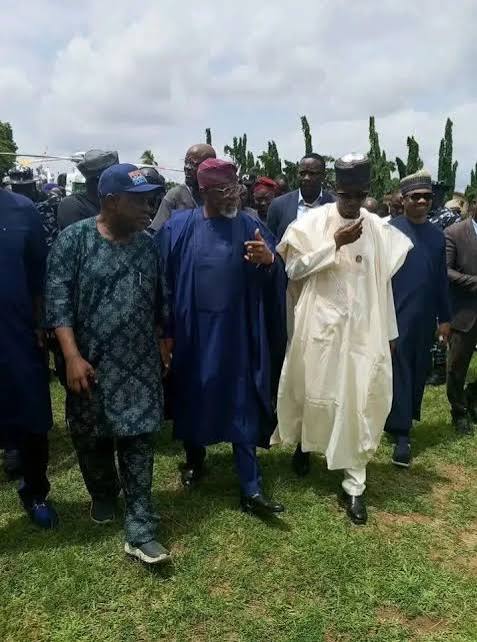
The nominations came shortly after President Tinubu met privately with Ahmed at the Presidential Villa in Abuja amid mounting allegations made by industrialist Aliko Dangote against the downstream regulator. Following the meeting, the President forwarded the names of Oritsemeyiwa Eyesan and Saidu Mohammed to the Senate for confirmation as Chief Executives of NUPRC and NMDPRA respectively.
Ahmed and Komolafe were appointed in 2021 under the Petroleum Industry Act (PIA) by the late President Muhammadu Buhari to lead the newly created regulatory bodies.
Eyesan, an Economics graduate of the University of Benin, brings nearly 33 years of experience from the Nigerian National Petroleum Company Limited (NNPCL). She retired in 2024 after serving as Executive Vice President, Upstream, and previously held senior strategic planning roles within the national oil company.
Mohammed, a Chemical Engineering graduate of Ahmadu Bello University, Zaria, and a native of Gombe State, has decades of experience in Nigeria’s oil and gas sector and was recently appointed as an independent non-executive director at Seplat Energy.
The leadership changes come against the backdrop of a public confrontation between Dangote Petroleum Refinery and the NMDPRA over Nigeria’s downstream petroleum regulation. Dangote has accused the regulator of issuing import licences that undermine local refining, describing the practice as economic sabotage.
He further alleged that the regulator was working in the interests of fuel importers and international traders, claims that the NMDPRA has not publicly addressed. Dangote also raised personal allegations against Ahmed, questioning his sources of income and claiming that millions of dollars were spent on his children’s education abroad.
On Monday, Dangote, through his lawyer, submitted a petition to the Independent Corrupt Practices and Other Related Offences Commission (ICPC), calling for an investigation into alleged corruption and misappropriation of public funds by Ahmed.
Ahmed, who left the Presidential Villa shortly after meeting Tinubu, declined to comment on the allegations or the circumstances surrounding his resignation.
Reacting to the dispute, legal expert and Senior Advocate of Nigeria, Dr Olisa Agbakoba, warned that the standoff goes beyond a commercial disagreement and poses serious implications for Nigeria’s control over its petroleum resources. He argued that continued fuel imports despite the presence of a large domestic refinery contradict Nigeria’s constitutional responsibility to manage its natural resources for the benefit of its citizens.
Energy analysts have expressed mixed views on whether the resignations were directly linked to Dangote’s allegations. While some see the timing as suspicious, others believe the leadership changes had been planned earlier.
As the Senate begins consideration of the President’s nominees, attention is expected to focus on whether ongoing investigations will proceed and whether the new leadership can restore confidence in Nigeria’s petroleum regulatory framework.