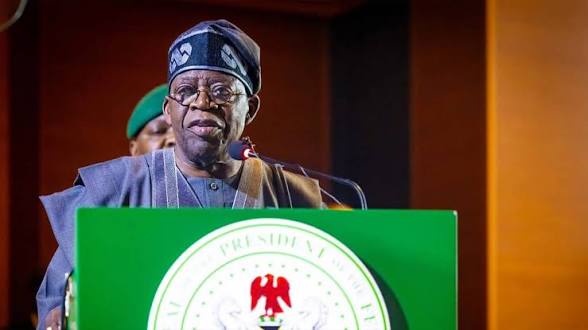
President Bola Ahmed Tinubu has approved the full reconstitution of the Board of the Nigerian Electricity Regulatory Commission (NERC) following the Senate’s confirmation of nominees on December 16.
The move underscores the administration’s renewed effort to stabilise Nigeria’s electricity market, strengthen regulatory oversight, and fast-track long-standing reforms in the power sector.
In a statement issued on Thursday, the President’s Special Adviser on Information and Strategy, Bayo Onanuga, said the new appointments—made up of returning commissioners and new members—align with the implementation of the Electricity Act, 2023. The Act expands the role of state governments, encourages competition, and creates room for sub-national electricity markets.
Dr Mulisiu Olalekan Oseni has been appointed Chairman of NERC, effective December 1, 2025. Oseni, who joined the commission in 2017 and previously served as Vice Chairman, brings institutional continuity at a time of major legal and structural transition. His tenure will last until he completes the statutory 10-year cumulative term.
Dr Yusuf Ali, first appointed as a commissioner in February 2022, has been elevated to Vice Chairman, also with effect from December 1, 2025. His role places him at the centre of critical regulatory functions, including licensing, tariff approvals, and compliance oversight.
Two commissioners—Nathan Rogers Shatti and Dafe Akpeneye—have been reappointed for second terms, having originally joined the commission in January 2017. Both have played key roles in tariff reforms, regulatory enforcement, and improvements in metering and market settlements.
Aisha Mahmud Kanti Bello, initially appointed in December 2020, has also been confirmed for a second term, while Dr Chidi Ike, appointed in February 2022, continues his first term, strengthening NERC’s expertise in market operations, consumer protection, and distribution oversight.
The only new entrant to the board is Dr Fouad Animashaun, whose first term begins in December 2025. An energy economist, Animashaun previously served as Executive Commissioner and Chief Executive Officer of the Lagos State Electricity Regulatory Commission, a background seen as fitting the Electricity Act’s emphasis on decentralised and state-led power markets.
According to the Presidency, Tinubu expects the reconstituted board to deepen ongoing reforms, enforce discipline across market operators, protect consumer interests, and attract investments capable of significantly improving power supply nationwide.
The President also stressed strict compliance with the Electricity Act, 2023, particularly provisions aimed at boosting generation through private capital, ensuring cost-reflective but fair pricing, supporting state-level regulatory autonomy, enforcing technical standards for distribution and generation companies, and addressing issues such as revenue shortfalls and energy theft.
The NERC reconstitution comes at a challenging period for the power sector, marked by low generation levels, liquidity constraints, and rising debts among distribution companies—challenges analysts say require strong, consistent regulation to restore investor confidence and ensure sustainable electricity supply.