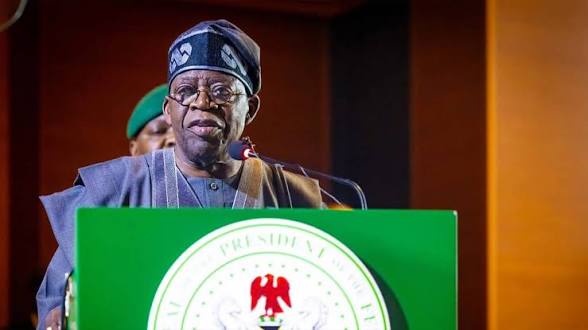
President Bola Tinubu on Friday presented the 2026 Appropriation Bill to the National Assembly, describing the proposed budget as one built on realism, fiscal discipline, and economic expansion.
According to figures released by the President’s Special Adviser on Media and Publicity, Bayo Onanuga, the Federal Government expects total revenue of ₦34.33 trillion in the 2026 fiscal year, while projected expenditure stands at ₦58.18 trillion. The expenditure estimate includes ₦15.52 trillion allocated for debt servicing.
Recurrent expenditure, excluding debt servicing, is projected at ₦15.25 trillion, while capital spending is estimated at ₦26.08 trillion, reflecting the administration’s focus on infrastructure and long-term growth.
The budget deficit is projected at ₦23.85 trillion, representing about 4.28 per cent of Nigeria’s Gross Domestic Product (GDP).
Explaining the thinking behind the proposal, Onanuga said the 2026 budget is anchored on “realism, prudence, and growth,” noting that the figures reflect national priorities rather than mere accounting entries. He added that the government remains committed to fiscal sustainability, transparent debt management, and value-for-money spending.
The 2026–2028 Medium-Term Expenditure Framework and Fiscal Strategy Paper formed the basis of the budget, with projections built on conservative economic assumptions. These include a crude oil benchmark of $64.85 per barrel, daily oil production of 1.84 million barrels, and an average exchange rate of ₦1,400 to the US dollar for the fiscal year.
Onanuga said the government would continue efforts to cut waste, strengthen financial controls, and ensure that borrowed funds are used to deliver tangible public benefits.
Sectoral allocations in the proposed budget reflect the administration’s Renewed Hope Agenda and the immediate needs of citizens. Defence and security received ₦5.41 trillion, infrastructure ₦3.56 trillion, education ₦3.52 trillion, and health ₦2.48 trillion.
Highlighting the link between these sectors, the presidency noted that security is critical to attracting investment, while education and healthcare are essential for boosting productivity. Infrastructure, it added, remains key to job creation and business growth.
Overall, the 2026 budget was described as a unified and strategic plan aimed at driving national renewal and sustainable development.