The Borno State Police Command has publicly challenged claims by the Nigerian Army regarding the arrest of a suspected suicide bomber in the state, describing the military’s version of events as “misinformation” and insisting that it was the police, not the army that carried out the operation.
The controversy stems from a statement issued by the Joint Task Force, North East (Operation Hadin Kai), in which the military said troops of the 152 Task Force Battalion, acting in conjunction with other security agencies, had arrested a suspected suicide bomber in Banki town, Bama Local Government Area on the evening of Monday, December 29, 2025.
In its statement, the military described the development as a “significant operational success.” According to the army’s account, the suspect, identified as Abubakar Mustapha, was apprehended near the Banki Central Mosque and found in possession of materials believed to be components of a primed improvised explosive device (IED).
“The Joint Task Force North East (JTF NE), Operation Hadin Kai (OPHK), has recorded a significant operational success with the arrest of a suspected suicide bomber and the interception of materials intended for the manufacture of improvised explosive devices (IEDs) in Borno State,” the military statement read in part.
The army added that the suspect was being interrogated to determine his possible sponsors and collaborators and reaffirmed its commitment to maintaining pressure on insurgent networks in the region.
However, the Police Public Relations Officer for the Borno State Police Command, ASP Nahum Daso, told PUNCH Online in a telephone interview that the military’s narrative did not align with the facts as the police understand them.
“The suspect shown in the pictures released by the Army is with us. I personally interviewed him last night. The items recovered from him are not IEDs. It was a police operation,” ASP Daso declared.
Speaking further, the police described the materials seized from the suspect as electrical wires, old mobile phone batteries, assorted gadget scrap materials and pairs of shoes, items that the command said did not constitute components for IED fabrication or priming.
According to the police, the suspect was accosted on December 29, 2025, at about 6:10 pm, during a routine surveillance around a mosque in Banki town, after which he was taken into custody and transferred to the State Command Headquarters for a comprehensive investigation.
The command also issued a warning against the spread of “unverified information capable of causing fear or panic,” urging the public to rely on official sources for accurate updates.
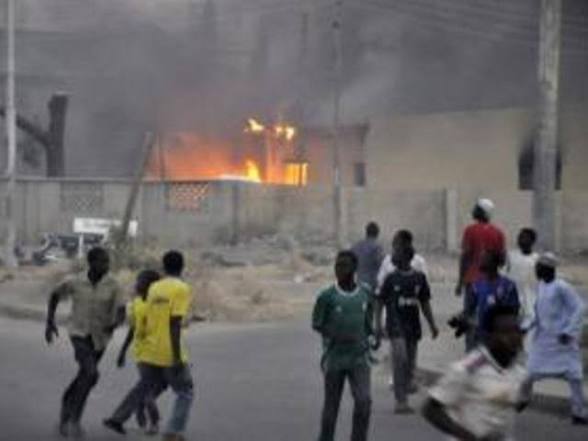
The conflicting statements from the military and the police add to the complexity of security reporting in northeastern Nigeria, a region long beset by insurgency and attacks by militant groups such as Boko Haram and the Islamic State West Africa Province (ISWAP). Multiple suicide bombings and explosive attacks have been recorded in Borno and surrounding states this year, including a deadly blast at a mosque in Maiduguri in late December 2025 that killed and injured dozens.
Security analysts say accurate and coordinated communication among security agencies is critical to public confidence and effective counterterrorism efforts, especially as violent extremist groups adapt their tactics. Until a joint statement or clarification is issued by both the police and the army, questions remain about the precise nature of the suspect’s arrest and the materials allegedly found in his possession.