Despite the rapid transition of the Federal Inland Revenue Service (FIRS) into the newly established Nigeria Revenue Service (NRS), concerns are mounting that Nigeria’s ambitious tax reform agenda may suffer delays due to weak inter-agency coordination, administrative bottlenecks and uncertainty surrounding the rollout of the National Single Window (NSW) platform.
Findings by The Guardian reveal a lack of alignment between the NRS and key agencies involved in port operations, including the Nigeria Customs Service (NCS), Nigerian Ports Authority (NPA) and the Nigerian Maritime Administration and Safety Agency (NIMASA). While the Nigerian Upstream Petroleum Regulatory Commission (NUPRC) has already relinquished royalty collection duties to the NRS following the signing of the new tax laws, revenue collection at the nation’s ports appears set to continue under the old structure pending the full deployment of the NSW.
Sources within the maritime sector disclosed that enforcement of the harmonised revenue collection framework may not commence until the NSW becomes operational, tentatively projected for March 2026. The platform, first conceptualised under former Finance Minister Dr Ngozi Okonjo-Iweala, has endured years of delays due to inter-agency rivalry and coordination challenges.
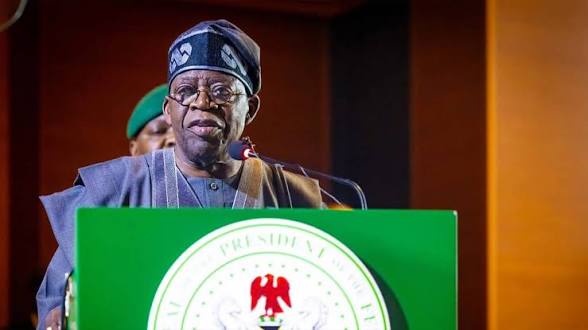
Although President Bola Tinubu reaffirmed the administration’s commitment to launching the NSW within the first quarter of 2026, no definitive take-off date had been announced as of press time, despite earlier user acceptance testing conducted last year.
A senior port official attributed the delay to poor communication and the absence of clear directives to personnel expected to drive the transition. The National Public Relations Officer of the Nigeria Customs Service, Dr Abdullahi Maiwada, confirmed that the Federal Government was yet to establish an implementation or inter-ministerial committee to oversee the transition.
“This is a sensitive national issue. The government will determine the modalities for implementation through an inter-ministerial committee,” Maiwada said, adding that Customs was collaborating with the NRS to ensure the NSW becomes operational this quarter.
He explained that all Customs clearing processes would be integrated into the NSW platform but noted that the NRS would provide clarity on how revenue collection would be synchronised once the system goes live.
Similarly, the General Manager of Corporate and Strategic Communications at the NPA, Ikechukwu Onyemekara, said implementation of the new framework would not be immediate.
“When all agencies commence implementation, we will comply fully with government directives. Implementation will naturally take time,” he said.
Under the four newly enacted laws — the Nigeria Tax Act 2025, Nigeria Tax Administration Act 2025, National Revenue Service (Establishment) Act 2025, and Joint Revenue Board (Establishment) Act 2025 — the NRS is designated as the sole federal agency responsible for revenue assessment and collection. The reform is designed to allow agencies such as the NCS to focus on core mandates like border security and trade facilitation.
However, unresolved operational gaps have raised concerns among businesses and investors. While the Tinubu administration insists the reforms are crucial for fiscal stability and reduced debt dependence, analysts warn that uncertainty surrounding execution could dampen investor confidence.
Tax reform committee chairman, Taiwo Oyedele, has continued to defend the reforms, stating that the laws explicitly prohibit multiple taxation and unauthorised levies. He assured that small businesses would be protected through exemptions and reduced tax rates, with sanctions imposed on erring agencies.
“The new tax laws clearly prohibit multiple taxation and unauthorised levies. Any agency acting outside the law will be sanctioned,” Oyedele said.
Despite these assurances, operators at the ports say confusion persists. Members of the Barge Operators Association of Nigeria (BOAN) and the Association of West African Exporters and Maritime Professionals (AWAEMAP) confirmed that statutory payments are still being made to NCS, NPA and NIMASA, as no official directives on new payment channels have been issued.
“As far as operations are concerned, nothing has changed,” said BOAN and AWAEMAP President, Olubunmi Olumekun.
The National Association of Government Approved Freight Forwarders (AREFFN) also confirmed that payments continue to be routed through Customs accounts, albeit linked to the central NRS framework, further fuelling confusion among stakeholders.
Experts have urged the Federal Government to adopt a phased implementation approach, beginning with the formal sector, to allow time for public education, system testing and trust-building. They argue that resistance to the reforms stems largely from poor communication and fear, rather than outright opposition.
Professor Godwin Oyedokun of Lead City University noted that while Nigeria’s tax-to-GDP ratio has improved from below 10 per cent to about 13 per cent by the end of 2025, it remains below peer economies such as South Africa, Senegal and Ghana. He said clearer communication and institutional coherence would be critical to achieving the government’s 18 per cent target by 2027.
While long-term prospects of the reform remain promising, analysts warn that early-stage uncertainty and implementation delays could leave lasting impressions on investors and businesses unless promptly addressed.