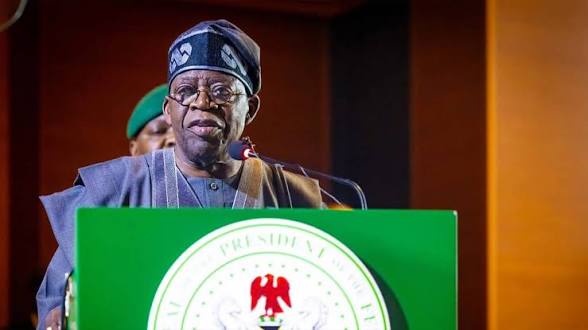
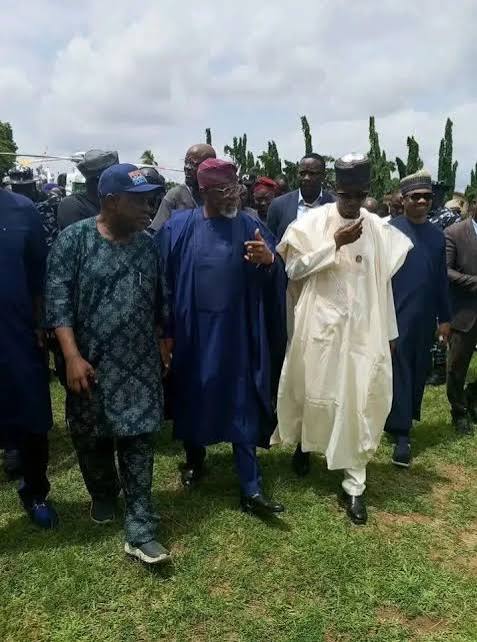
President Bola Ahmed Tinubu has reportedly intervened in the escalating political standoff in Rivers State, summoning Nyesom Wike, the Minister of the Federal Capital Territory (FCT), for high-level talks as lawmakers in the state legislature embark on a fresh impeachment process against Governor Siminalayi Fubara and his deputy, Ngozi Odu, a development that signals renewed tensions in one of Nigeria’s most critical political battlegrounds.
According to reports, Mr. Wike has been asked to meet President Tinubu abroad in an effort to address the deepening crisis, which many political observers see as rooted in the breakdown of a previously brokered peace deal between two powerful political figures.
On January 8, 2026, the Rivers State House of Assembly commenced impeachment proceedings against Governor Fubara and Deputy Governor Odu during a plenary session. The Majority Leader, Major Jack, read a notice of alleged gross misconduct signed by 26 lawmakers and presented under Section 188 of the Constitution.
Lawmakers accused the governor of a catalogue of offences, including the demolition of the Assembly complex, extra-budgetary spending, the withholding of funds meant for the Assembly Service Commission, and alleged failure to comply with a Supreme Court ruling on legislative autonomy, all cited as breaches of constitutional duties.
Speaker Martins Amaewhule informed the chamber that the notice would be formally served on Fubara within the constitutionally stipulated seven-day timeframe, setting the stage for the next phase of the impeachment process.
The reported move by President Tinubu to summon Minister Wike comes against the backdrop of these impeachment proceedings and aims to avert further deterioration of political relations in Rivers, a key oil-producing state. Wike and Fubara were once political allies, but the relationship deteriorated sharply after Fubara succeeded Wike as governor following the 2023 elections.
Sources close to the presidency told journalists that the meeting is expected to take place outside Nigeria, and reflects the federal government’s desire to manage the crisis before it spirals further.
The impeachment move follows public accusations by Mr. Wike in late 2025 that Governor Fubara had failed to honour a peace agreement brokered by President Tinubu in June 2025, a pact intended to bring lasting peace to Rivers’ fractious political environment.
While the Assembly’s action aligns with those allegations, lawmakers and political figures are framing the crisis differently. Enemi George, the Assembly’s spokesperson, told media outlets that the impeachment process was constitutional and must not be reduced to the influence of any single individual, dismissing suggestions that Wike was orchestrating legislative actions from behind the scenes.
He emphasised: “If we begin to mix politics with constitutional matters, we will begin to cause trouble…It is insulting to reduce the activities of an institution created by the Constitution to just politics or an individual.”
Reactions are sharply divided. The Rivers State chapter of the All Progressives Congress (APC) has rejected the impeachment move, warning that it could destabilise the state’s governance and disrupt development. Critics argue that the legislature is importing internal disputes into what should be constitutional oversight.
Conversely, civil society groups such as the Ijaw National Congress (INC) have condemned the impeachment threat as a “grave threat to democracy”, urging President Tinubu to act decisively to preserve peace and stability in the Niger Delta region. The INC stated that impeachment should not be used as a political weapon and highlighted the potential economic and social repercussions of sustained political conflict.
The political discord in Rivers State has deep roots. In March 2025, President Tinubu once declared a state of emergency in the state in response to mounting tensions between Fubara and Wike, suspending the governor and the entire House of Assembly for six months, a controversial measure at the time. Fubara resumed office in September 2025 after the emergency rule was lifted.
Fubara’s recent defection from the Peoples Democratic Party (PDP) to the APC in December 2025 has also reshaped political alliances in the state, further complicating the crisis and adding a layer of party politics to an already volatile situation.
As impeachment proceedings unfold, national political watchers will be closely monitoring the outcome of the Tinubu-Wike meeting, and whether federal intervention can stem a crisis with far-reaching implications for governance and political stability in Nigeria’s oil-rich south. The Assembly’s next actions, including serving formal notices and potential hearings, could determine whether the governor faces removal or if a negotiated political settlement emerges.