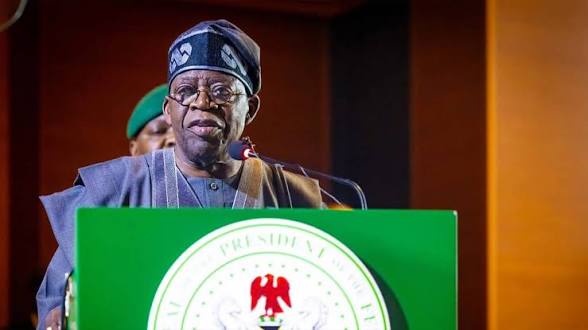
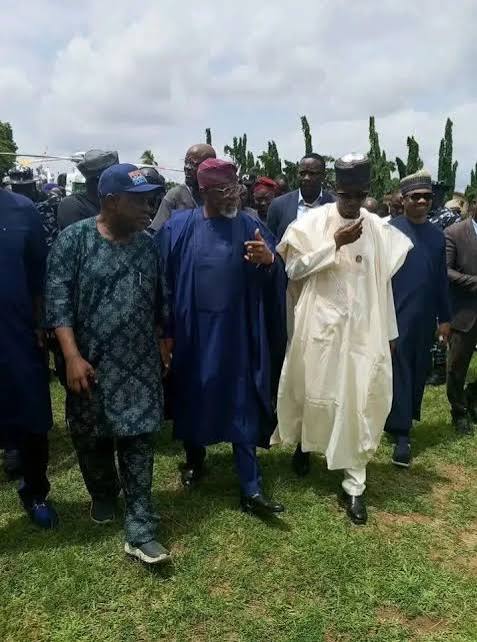
A former Chief of Army Staff Lt. Gen. Tukur Buratai (retd.) has warned deploying military into the internal conflict demean the purpose of Nigeria Police Force, urging a rebalancing of roles to strengthen the nation’s security architecture. He delivered the critique on Monday in Abuja, where he was the keynote speaker at the 2026 Armed Forces Celebrations and Remembrance Day Lecture.
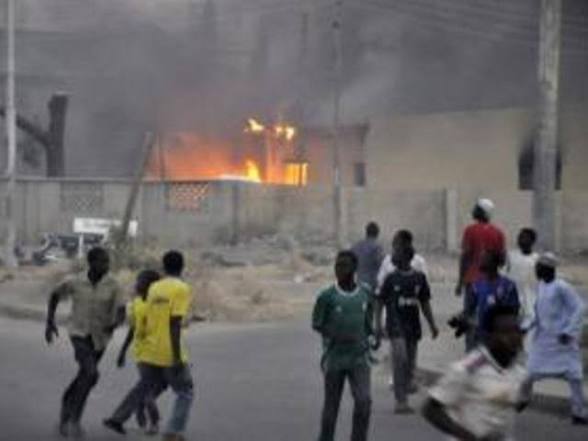
His remarks come amid continued military support for internal security operations nationwide, including in the Federal Capital Territory (FCT) and across Nigeria’s 36 states, where army personnel have been deployed to confront terrorism, banditry and other forms of violent crime.
Buratai acknowledged that the military’s presence has yielded “immediate stability” in volatile areas, but cautioned that this short-term benefit has long-term consequences for Nigeria’s law enforcement structures and defence readiness.
“The extensive deployment of the Armed Forces of Nigeria in internal security provides immediate stability, but it also perpetuates a cycle of dependency that weakens civil police capacity and strains defence resources,” Buratai said.
He observed that ongoing reliance on military forces for everyday security tasks has created what he termed a “dangerous imbalance,” with defence budgets and personnel disproportionately directed toward routine policing duties rather than preparing for external threats or conventional warfare.
Buratai outlined a constitutional perspective, emphasising that the Armed Forces’ primary mandate is to, defend Nigeria against external aggression, protect territorial integrity, suppress insurrection, and, when necessary, provide aid to civil authorities.
The retired general insisted that internal security must be “civil-driven and intelligence-led,” with the Nigeria Police Force and state security services taking the lead in crime prevention and law enforcement.
“Internal security, more or less, should be civil-driven and intelligence-driven by the state intelligence services and the police, essentially,” he added.
Buratai warned that the continued expansion of the military’s internal role risks permanently displacing civilian institutions from their core functions and weakening democratic governance.
“The Armed Forces of Nigeria remains a vital force for national development and stability,” he said, “but its expanded internal role must not compromise its core mandate or weaken civilian institutions.”
He urged a clear, time-bound and conditions-based exit strategy that would enable a phased return of domestic security responsibilities to civilian authorities while preserving military readiness for external defence.
Buratai emphasised that Nigeria’s long-term security and democratic stability depends on well-equipped and professional police and intelligence services, reserving the military for exceptional situations rather than routine law enforcement.
His comments highlight an ongoing debate within Nigeria’s security circles about the role of the armed forces in internal operations. Civilian policing agencies have historically struggled with resource constraints, limited manpower and operational challenges — factors that have frequently necessitated military intervention. Independent analyses note that an overstretched police force and underfunded civilian agencies have contributed to an expanding role for the military in internal security tasks that traditionally fall under civilian law enforcement responsibilities.
Also speaking at the event, Defence Minister General Christopher Musa (retd.) underscored the importance of a coordinated approach to security, especially cracking down on criminal networks that exploit local transport systems to move weapons, narcotics and other illicit materials across the country.
Musa described security as a shared responsibility involving local governments, community leaders and traditional institutions, not solely the military, in confronting Nigeria’s complex security challenges.