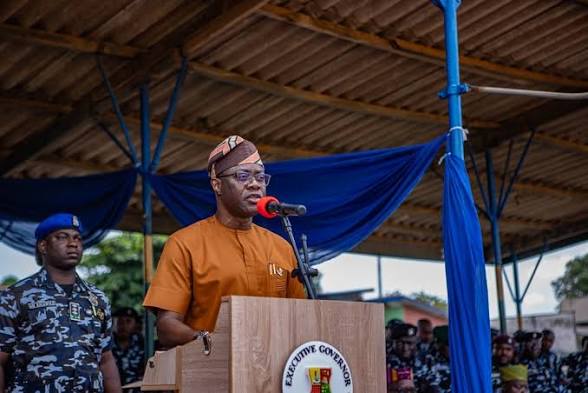
Constituents from the Kogi East Senatorial District have formally endorsed Governor Ahmed Usman Ododo for a second term in office in the 2027 general election, while also resolving to pursue a wider political strategy aimed at ensuring the return of the governorship to their zone after his tenure. The resolutions were adopted at the Kogi East Political Summit held on Sunday at the auditorium of Prince Abubakar Audu University, Anyigba.
In a communiqué issued at the end of the summit and signed by Musa Isiaka, Chairman of the Planning Committee, and Professor David Menenge, Secretary of the Planning Committee, leaders said their decision was shaped by a collective desire for unity, equity and a pragmatic political strategy that would enhance their district’s influence in the state’s political landscape.
“Kogi East remains committed to the ideals of fairness, social justice and sustainable development, and recognises the need for a broad-based alliance to actualise its long-standing aspiration to lead the state,” the communiqué stated, underscoring the bloc’s determination to reshape political engagements ahead of the elections.
The summit, organised by the Kogi Elites Forum, which brought together academics, traditional and religious leaders, civil society organisations, women and youth groups, students, faith-based organisations and Kogi East indigenes in the diaspora, provided a platform for wide-ranging discussions on the district’s political future.
In his keynote address, Professor Ilemona Adofu, Deputy Vice-Chancellor of Nasarawa State University, stressed the need for strategic alliances across the state, saying that numerical strength alone would not guarantee electoral success. He urged participants to pursue a statewide political agenda rather than an ethnic-based campaign, arguing that this would position Kogi East more favourably in general elections.
As part of the summit’s resolutions, attendees took stock of Governor Ododo’s record in office, particularly his efforts in infrastructure development and security management across the state, and expressed confidence that his leadership merited continuation for another four-year term.
“Having assessed the performance of Governor Ahmed Usman Ododo so far, the summit unanimously endorses him to seek re-election in 2027,” the document added. It also reiterated that such support came with the “clear understanding that power should rotate back to Kogi East at the end of his second term in 2031.”
Beyond endorsing Ododo, the summit resolved to establish a “Movement for Strategic Alliance” to mobilise stakeholders for peaceful, violence-free elections and to discourage political malpractice ahead of the polls. This body is expected to engage leaders across the state’s three senatorial districts to forge political cooperation that extends beyond 2027.
A high-powered committee with representatives from Kogi East, Central (Ododo’s home zone) and West was also slated for constitution to develop the modalities for power rotation after 2031, ensuring that Kogi East’s aspirations are integrated into the broader political strategy of the state.
The summit’s discussions also included proposals to strengthen state security structures, including support for the establishment of a military barrack at Ogidibeje Junction. Summit participants noted that the development would significantly enhance security in Kogi State, and proposed the creation of a local security outfit to complement federal and state agencies.
Traditional rulers were likewise encouraged to form a Kogi East Council of Traditional Rulers to facilitate better consultation and engagement between government and community structures.
The endorsement from Kogi East adds to a growing narrative within Kogi State politics, where leaders across zones are negotiating alliances, endorsements and strategic partnerships ahead of the 2027 general elections, a contest that analysts say will hinge on coalition-building and equitable power sharing in the ethnically diverse state.
Governor Ododo’s re-election bid, backed by influential stakeholders across Kogi, reflects this broader push within the ruling All Progressives Congress (APC) to maintain political cohesion while positioning the state for continued development and governance stability.