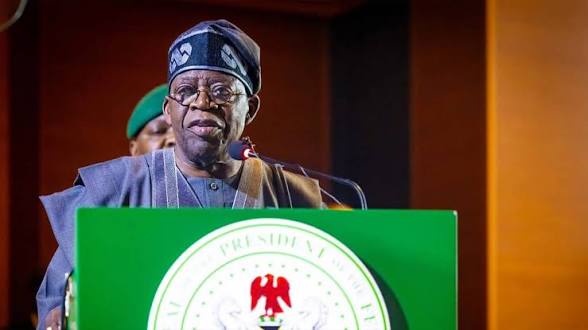
The Federal Government under President Bola Ahmed Tinubu has formally begun the process of calling on student beneficiaries of the Nigerian Education Loan Fund (NELFUND) to commence repayment of the loans they received, less than two years after the start of the programme.
According to a circular dated January 23 and signed by A. A. Bobola, Registrar of the University of Benin, students who benefitted from NELFUND loans are required to follow a specified repayment procedure issued by the federal government.
The circular addressed to indebted students at the University of Benin states, “This is to inform all students of the University of Benin who are beneficiaries of the Nigerian Education Loan Fund (NELFUND) that the University Management has received the official guidelines for the repayment of student loans…Please ensure that you follow these steps carefully to avoid any delay in confirming your loan repayment. Members of the University Community, particularly affected students, are hereby requested to please note and comply accordingly.”
The directive marks a significant development in the implementation of the student loan scheme, which was established to expand access to higher education financing under the Students Loan (Access to Higher Education) Act. The Act was signed into law by President Tinubu in 2024, creating NELFUND as the vehicle for disbursing interest-free loans to students across public tertiary institutions in Nigeria.
Earlier this month, the Managing Director of NELFUND, Akintunde Sawyerr, provided a progress update on the initiative, revealing extensive uptake and large disbursements since inception. According to Sawyerr, the fund has received 1,361,011 applications from students nationwide, with 864,798 students so far benefiting from the loan scheme.
In detailed figures shared by the agency, Sawyerr said a total of ₦161.97 billion has been disbursed through the programme: ₦89.94 billion paid directly to 263 tertiary institutions to cover tuition and institutional charges, and ₦72.03 billion paid directly to students as upkeep allowances.
The rollout has been among the most ambitious education financing efforts by the Tinubu administration, intended to ensure that eligible Nigerian students are not left behind due to financial barriers.
While specific deadlines for repayment under the new guidelines were not detailed in the circular, prior information from NELFUND guidelines indicates that repayment is generally scheduled to begin after a grace period following graduation and completion of the National Youth Service Corps (NYSC) or exemption. Under those terms, beneficiaries typically begin repayment two years after completing service, with deductions set at a proportion of income under a “Pay As You Earn” (PAYE) or self-employment model.
Despite these official plans, the announcement is expected to generate mixed reactions among tertiary students and recent graduates, many of whom had anticipated more extended grace periods or additional support mechanisms amid Nigeria’s challenging economic climate.
The Nigerian Education Loan Fund was conceived as part of the Tinubu administration’s Renewed Hope Agenda to widen access to tertiary education by easing financial burdens on students and families. Since the launch of the loan portal in mid-2024, millions of Nigerians have applied, with NELFUND issuing loans to hundreds of thousands of beneficiaries.