The United States Congress has urged the establishment of a far-reaching bilateral agreement between Washington and Abuja to strengthen efforts against terrorism and address growing concerns over religious violence in Nigeria.
The proposal was contained in a joint position released by the US House Appropriations Committee and the House Foreign Affairs Committee, details of which were shared on Tuesday by Congressman Riley Moore through his X handle.
In a statement titled “Ending the Persecution of Christians in Nigeria,” US lawmakers praised President Donald Trump for redesignating Nigeria as a Country of Particular Concern, saying the decision was intended to promote accountability and encourage stronger protection for vulnerable populations.
Nigeria was first placed on the designation list in 2020 during Trump’s administration but was later removed shortly after President Joe Biden took office. The US government, however, returned Nigeria to the religious freedom watchlist in October 2025 following renewed concerns over violence.
Trump had previously alleged that Christians in Nigeria were facing persistent attacks, while the US Congress earlier recommended sanctions such as visa bans and asset freezes against individuals and groups accused of violating religious freedom. Among those mentioned were former Kano State Governor Rabiu Kwankwaso, as well as Miyetti Allah Cattle Breeders Association of Nigeria and Miyetti Allah Kautal Hore.
According to the committees, Trump mandated lawmakers to investigate claims of violence against Christian communities. The process included congressional hearings, investigative sessions and a fact-finding visit to Nigeria led by senior US legislators, including Appropriations Vice Chair Mario Díaz-Balart and House Foreign Affairs Committee Chairman Brian Mast.
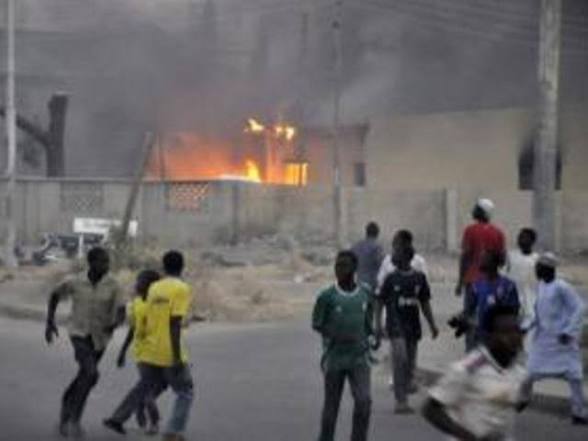
The committees concluded that violent attacks by armed groups and terrorist organisations had led to significant loss of lives, kidnappings and destruction of places of worship and educational facilities. Lawmakers also criticised the use of blasphemy laws in parts of northern Nigeria, arguing that such regulations were sometimes applied in ways that suppressed dissent and targeted minorities.
Despite describing Nigeria as an important ally, Congress stressed that the Nigerian government must demonstrate stronger commitment by deploying adequate resources and political will towards ending insecurity and safeguarding affected communities.
A key aspect of the recommendations is a proposed security and economic partnership designed to protect vulnerable groups, curb jihadist activities, deepen economic ties and limit the growing influence of China and Russia in the region.
Under the suggested framework, Nigeria would jointly fund humanitarian assistance for internally displaced persons, improve early-warning security mechanisms, strengthen rapid-response deployments and support the restoration of agricultural communities disrupted by armed conflict. Lawmakers also advocated deeper counter-terrorism cooperation, provision of surplus US defence equipment and a gradual reduction in reliance on Russian military systems.
The proposal further includes targeted sanctions against perpetrators of religious violence, stricter monitoring of US assistance to Nigeria, an audit of aid programmes and enhanced intelligence assessments on sectarian conflicts. Congress also encouraged collaboration with international partners such as France, Hungary and the United Kingdom, alongside increased diplomatic engagement in Nigeria.
Following Nigeria’s redesignation, the Federal Government sent a delegation led by the National Security Adviser, Nuhu Ribadu, to the United States to engage American officials and clarify the country’s security situation. Nigerian authorities maintained that ongoing violence was driven by criminality, insurgency and communal disputes rather than religious policy.
Responding to the congressional report, the Minister of Information and National Orientation, Mohammed Idris, said the government viewed the development as an opportunity to reinforce cooperation with the United States while reaffirming its responsibility to protect all citizens irrespective of faith or ethnicity.
Idris emphasised that Nigeria has never operated a policy of religious persecution, adding that security agencies were confronting complex threats involving terrorism and organised crime. He noted that ongoing measures include intensified military operations, improved intelligence coordination, deployment of forest guards and expanded humanitarian support for displaced persons.
He also reaffirmed Nigeria’s commitment to sustaining its longstanding partnership with the United States, stressing that continued engagement would be based on mutual respect, shared interests and recognition of Nigeria’s sovereignty.