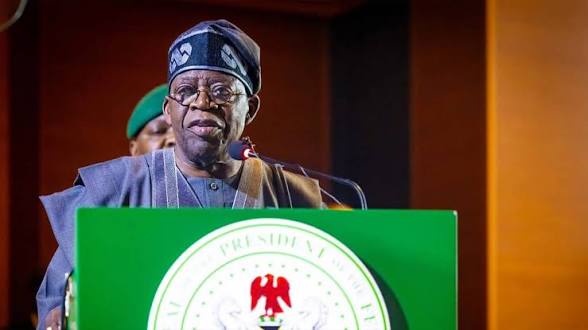
The Senate of Nigeria has approved a $6 billion external borrowing request submitted by President Bola Ahmed Tinubu, in a move aimed at stabilising the economy and sustaining critical infrastructure projects across the country.
The approval followed deliberations during plenary after the presentation of a report by Aliyu Wamakko, Chairman of the Senate Committee on Local and Foreign Debts.
In a letter to lawmakers, President Tinubu outlined plans to establish a structured Total Return Swap (TRS) financing arrangement of up to $5 billion with First Abu Dhabi Bank. The facility is designed to be drawn in phases rather than as a lump sum, a strategy intended to reduce immediate debt servicing pressure.
According to the Presidency, the funds will be used to support budget implementation, finance priority infrastructure, and refinance existing domestic and external debts. Officials argue that the phased borrowing approach will help maintain economic stability while ensuring key national projects are not stalled.
As of the end of 2025, Nigeria’s total public debt stood at approximately $110.3 billion (₦159.2 trillion), raising ongoing concerns about debt sustainability. The government, however, maintains that the new borrowing plan will create fiscal breathing space and improve financial management.
In a related development, the President also sought approval to issue naira-denominated federal government securities as collateral for the financing arrangement, alongside provisions for settling margin obligations in U.S. dollars.
Additionally, the Senate approved a separate $1 billion export finance facility from the United Kingdom, arranged by Citibank. The funds are earmarked for the reconstruction and rehabilitation of the Lagos Port Complex and Tin Can Island Port—two of Nigeria’s busiest maritime hubs expected to benefit from improved efficiency and reduced congestion.
While the government insists the loans are necessary for economic growth and infrastructure development, the decision has sparked mixed reactions among Nigerians, with many expressing concerns over the rising debt burden and its implications for future generations.