Tension is mounting within the Bauchi State chapter of the All Progressives Congress as party leaders remain split over moves to bring Governor Bala Mohammed into its ranks, exposing deepening divisions ahead of a potential political shake-up in the state.
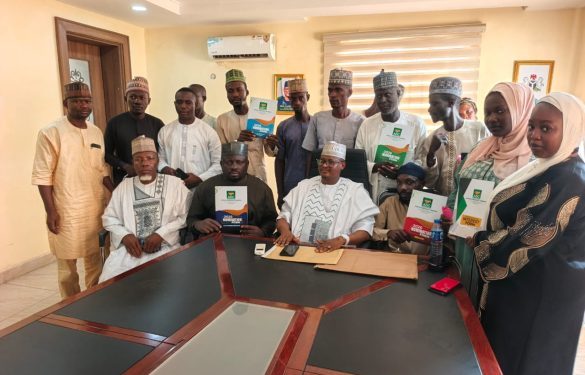
The disagreement came to a head at a caucus meeting held in Abuja on Wednesday, where stakeholders clashed over the political fallout and structural impact of admitting the governor into the party.
To contain the crisis, the caucus agreed to establish a high-level committee mandated to streamline positions within the fold and open channels of engagement with the party’s national leadership.
Acting caucus secretary, Dabo Ismail, said the committee would spell out conditions for Mohammed’s possible entry while ensuring that party stakeholders in Bauchi are not sidelined in the process.
He maintained that the governor’s potential defection was not being opposed outright, but insisted that due process and internal democracy must guide any decision.
Ismail urged the party’s national leadership to carry state actors along, warning that exclusion could worsen internal discontent.
Despite this position, several leaders voiced unease over what they described as a lack of consultation in handling the matter.
The caucus chairman and senator representing Bauchi North, Sama’ila Dahuwa, criticised the approach, cautioning against imposing decisions without the input of critical stakeholders at the grassroots.
Members warned that sidelining established party structures could erode unity and weaken cohesion within the APC in the state.
Dahuwa revealed that the committee comprises influential figures, including a serving minister, former governors and senators, reflecting the gravity of the issue.
The caucus also resolved to escalate its concerns to the party’s national leadership, insisting that any integration of new entrants must strictly follow laid-down procedures.
The controversy surrounding Mohammed’s possible defection comes amid shifting alliances ahead of the 2027 general elections and lingering uncertainties within the Peoples Democratic Party.
The governor, a former Minister of the Federal Capital Territory and a key PDP figure in the North-East, has recently hinted at exiting the party following unresolved internal disputes.
On March 31, 2026, he indicated plans to join the African Democratic Congress, a move widely interpreted as part of broader opposition realignments.
However, recent political engagements have fuelled speculation about a possible switch to the APC instead.
This followed a closed-door meeting at the Bauchi Government House involving the APC National Chairman, Nentawe Yilwatda, and Kano State Governor, Abba Yusuf, which heightened talks of a potential deal.
Subsequently, the governor held consultations with loyalists and PDP stakeholders, leading to the setting up of an exit committee by the state PDP leadership to determine his next political move.
Sources within the party said the unfolding situation presents a delicate balancing act for the APC in Bauchi.
While Mohammed’s entry could strengthen the party’s electoral chances, it also raises fears of internal backlash over the possible displacement of loyal members and disruption of existing power arrangements.