The African Democratic Congress (ADC) has accused Peter Obi of showing little interest in the party’s policy direction during his brief stay, alleging that his primary focus was securing the party’s presidential ticket ahead of the 2027 elections.
Speaking on a television programme, the ADC National Publicity Secretary, Bolaji Abdullahi, said the party had spent months developing detailed policy frameworks, but Obi did not engage with them. According to him, Obi lacked knowledge of the party’s stance on key national issues such as fuel subsidy and security because he never participated in internal policy discussions.
Abdullahi explained that members of the ADC fall into three groups: those who use the party merely as a platform to contest elections, those committed to ending what they describe as poor governance under the ruling All Progressives Congress (APC), and those genuinely interested in building a policy-driven political party. He suggested that Obi belonged to the first category.
Despite the recent exit of Obi and Rabiu Kwankwaso, Abdullahi described the development as a temporary setback rather than a major blow to the party’s future. He expressed confidence that the ADC would recover and remain competitive in a potential three-way contest in 2027.
He also dismissed claims that Atiku Abubakar had become the leading contender for the party’s presidential ticket, stressing that the ADC would not serve as a vehicle for any individual ambition. He added that figures such as Rotimi Amaechi are still in the race.
Obi and Kwankwaso had joined the ADC in March 2026 as part of a broader opposition coalition aimed at challenging the APC.
However, both politicians exited the party shortly after, citing internal crises, legal disputes, and alleged attempts to hinder their political participation.
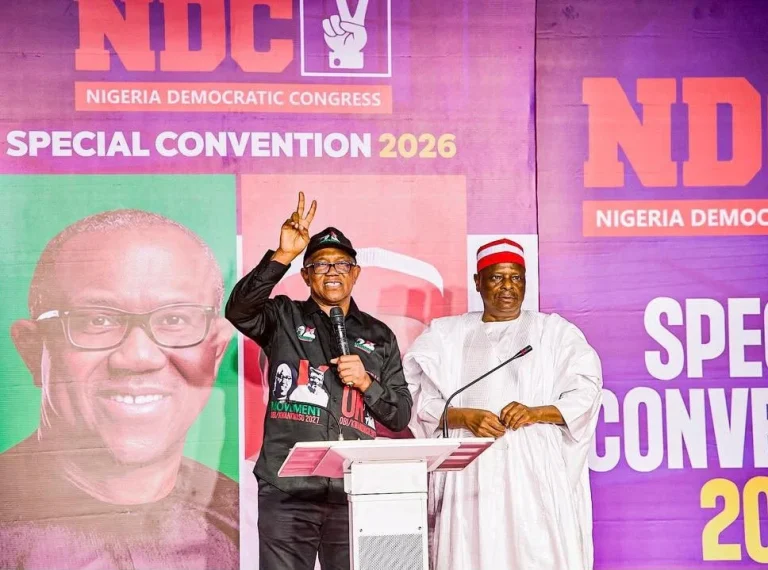
Following their departure, they aligned with the Nigeria Democratic Congress and called for an end to what they described as litigation-driven politics. Obi, however, maintained that his decision to leave the ADC was motivated by a desire to “rescue Nigeria,” not personal ambition.