The Federal Government has said it will not intervene to regulate petrol prices despite rising global oil prices caused by the ongoing Middle East conflict.
Speaking in an interview, Nigeria’s Minister of Finance, Wale Edun, explained that the government prefers to maintain market-based pricing for petroleum products rather than controlling prices.
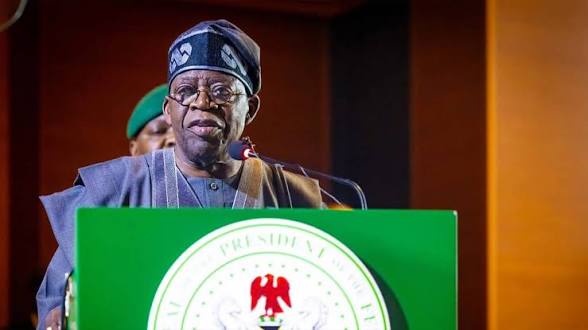
According to him, the administration of Bola Ahmed Tinubu will instead introduce alternative measures to ease the burden on Nigerians.
One of the initiatives already announced is the distribution of 100,000 additional compressed natural gas (CNG) conversion kits to help motorists convert their vehicles from petrol to CNG. The minister noted that CNG costs only about 25–30 percent of the price of petrol, making it a cheaper alternative.
Edun explained that government intervention in price regulation usually happens only when there is a failure in the market, which he said is not the case currently.
The Middle East crisis involving the United States, Israel, and Iran has caused significant fluctuations in global oil prices. On March 9, crude oil prices rose above $100 per barrel, the highest level since 2022, before dropping to around $87 per barrel the following day.
The finance ministry earlier warned that the conflict could affect Nigeria’s oil and gas prices, international financial flows, and global logistics costs.
As a result of rising crude prices, petrol prices in Nigeria have increased sharply, with some filling stations selling fuel at higher rates. This has also caused transport fares to double on several routes across the country.
Market Forces Driving Fuel Prices
Edun also commented on the pricing decisions of private refineries, particularly the refinery owned by Aliko Dangote.
He said the refinery’s pricing reflects market dynamics, noting that fuel prices do not always move in one direction.
Recently, the Dangote Refinery reduced its ex-gantry petrol price to ₦1,075 per litre after previously increasing prices three times.
The minister added that Nigeria should be grateful for the country’s growing local refining capacity, which has helped cushion the effects of global disruptions.
He credited the resilience of Nigeria’s petroleum supply largely to private-sector investments in refining, especially by the Dangote Group.
Edun concluded that Nigeria must continue supporting local refiners to ensure stable fuel supply and economic stability.
Meanwhile, the opposition African Democratic Congress (ADC) has urged the government to introduce a temporary cap on petrol prices to reduce the cost of living for Nigerians.