President Bola Tinubu has disclosed that Nigeria will spend $11.6 billion on debt servicing in 2026, warning that the burden limits the country’s ability to invest in critical sectors of the economy.
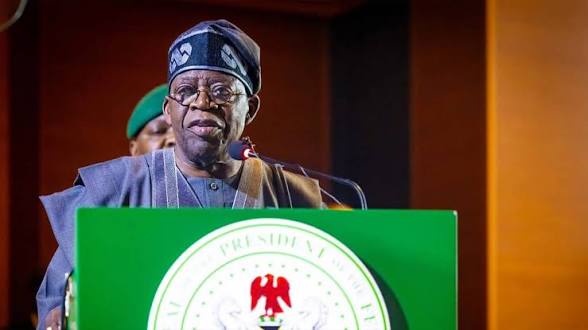
Tinubu made the statement on Tuesday at the Africa Forward Summit in Nairobi, Kenya, according to a release by his Special Adviser on Information and Strategy, Bayo Oyenuga.
The President said that nearly half of Nigeria’s projected revenue for 2026 would be allocated to debt repayment under the prevailing global financial framework. He noted that every dollar used to service debt reduces the amount available for infrastructure, industrial development, education, and job creation.
He argued that African countries continue to be classified as high-risk borrowers despite implementing economic reforms and fiscal adjustments. According to him, this perception restricts access to affordable long-term financing needed for industrial growth.
Tinubu questioned how African manufacturers could compete globally when borrowing costs in many African nations are significantly higher than those in Europe, Asia, or North America. He also highlighted the challenges of financing infrastructure projects within the framework of the African Continental Free Trade Area (AfCFTA), saying limited access to capital undermines regional value chains.
He described the current international financial system as one that constrains Africa’s industrial ambitions, stressing that reforms are needed to create a more balanced global financing structure.
The President also referenced Nigeria’s domestic economic reforms, including the removal of fuel subsidies, exchange rate unification, banking sector recapitalisation, and the country’s exit from the Financial Action Task Force (FATF) grey list. He said these measures were sovereign decisions aimed at stabilising the economy and restoring investor confidence.
Tinubu noted that the reforms have contributed to a declining debt-to-GDP ratio projected at 32.3 percent in 2026, stronger external reserves estimated at $45.5 billion, and renewed investor interest.
He reiterated that Nigeria is not seeking financial charity but a global financial system that supports industrialisation, value addition, and fair competition in international markets. According to him, Africa must be able to refine its raw materials, manufacture goods, and participate equitably in global trade.