Despite worsening insecurity across Nigeria, more than 500 senior military officers — including Major Generals, Brigadier Generals, Rear Admirals, and Air Vice Marshals — have been forced into early retirement under the administrations of former President Muhammadu Buhari and incumbent President Bola Tinubu.
The mass retirements, which spanned the Army, Navy, and Air Force between 2015 and 2023, followed the long-standing military tradition that mandates officers senior to or of the same course as newly appointed service chiefs to leave the service.
Military authorities have defended the practice, describing it as a means of preserving discipline, hierarchy, and operational efficiency. However, insiders claim that the actual number of affected officers may exceed 900, although The PUNCH could not independently verify the figure.
Waves of Retirement Since 2015
The first wave came in July 2015 after Buhari appointed new service chiefs — Lt.-Gen. Tukur Buratai (Army), Air Marshal Sadique Abubakar (Air Force), and Vice Admiral Ibok-Ete Ibas (Navy). Over 100 senior Army officers and 20 naval officers, including a Rear Admiral, were forced out.
In 2021, following another reshuffle that brought in Air Marshal Isiaka Amao, the late Lt.-Gen. Ibrahim Attahiru, and Vice Admiral Awwal Gambo, about 123 Army Generals and over 100 senior officers from the Air Force and Navy also exited.
After Attahiru’s death in a plane crash, his successor, Gen. Farouk Yahaya, was appointed despite being junior to many serving officers. His promotion led to the voluntary retirement of over 20 Generals from Courses 35 and 36.
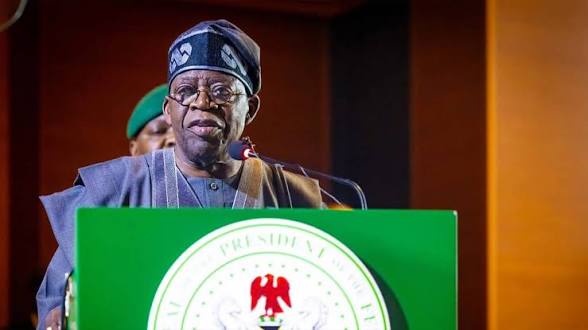
Tinubu continued the trend after assuming office. His June 2023 appointment of Lt.-Gen. Taoreed Lagbaja, Air Marshal Hasan Abubakar, and Vice Admiral Emmanuel Ogalla resulted in the premature retirement of 51 Army Generals, 49 Air Force officers, and 17 naval officers.
Last Friday, Tinubu again announced a shake-up: Gen. Olufemi Oluyede replaced Gen. Christopher Musa as Chief of Defence Staff; Maj.-Gen. Waidi Shaibu became Chief of Army Staff; Air Vice Marshal Sunday Aneke was appointed Chief of Air Staff; and Rear Admiral Idi Abbas took over as Chief of Naval Staff. This could see another 60 top officers leaving service if the military tradition persists.
Mixed Reactions
Retired officers have expressed diverse opinions on the continued purge.
Gen. Ishola Williams (retd.) condemned the arbitrary retirements, calling them a remnant of the military regime era.
“It’s abnormal to announce a replacement without prior notice to affected officers. This practice disrupts order and morale,” he said.
Williams suggested establishing a structured succession system that allows senior officers to anticipate career progression, reducing sudden disruptions.
Conversely, Gen. Aliyu Momoh (retd.) praised Tinubu’s decisiveness but urged him to tackle entrenched “cabals” allegedly manipulating the military.
“If he doesn’t remove them, we’ll keep facing the same problems, no matter who becomes President,” Momoh warned.
Brig.-Gen. Adewinbi (retd.) described the retirements as an unavoidable tradition:
“You can’t tell the Commander-in-Chief who to appoint. Many of us have been victims. What’s important is finding ways to use the expertise of retired officers, perhaps through reserve forces,” he advised.
Group Capt. Sadique Shehu (retd.), who served on Buhari’s Armed Forces Reform Committee, described the practice as “unsustainable.” He revealed that by 2022, Nigeria had 960 Generals overseeing about 235,000 personnel, compared to the U.S., which has roughly 900 Generals for 1.3 million troops.
“We have too many Generals. When a new Chief is picked from a lower course, hundreds are forced to retire. It’s wasteful,” he said.
He called for legislative oversight to streamline promotions and define service chiefs’ tenure to reduce political interference.
However, Maj.-Gen. Lasisi Abidoye (retd.) and Maj.-Gen. P.J.O. Bojie (retd.) defended the process as normal and essential for maintaining efficiency and career progression.
“Routine retirement is healthy. Keeping a service chief too long stagnates others,” Abidoye explained.
Bojie added that the practice “is in line with military tradition” and should not be a cause for concern.
Structural Challenges
Experts agree that the root of the problem lies in poor manpower planning, politicized promotions, and a bloated command structure. Many Generals, they noted, hold titles without defined responsibilities — a situation seen as wasteful and counterproductive.
Shehu concluded,
“Until we reduce the number of Generals and define clear promotion limits, this cycle of mass retirement will persist.”