The World Bank has confirmed that Nigeria has requested a new $1 billion Development Policy Financing (DPF) facility under an initiative titled “Nigeria Actions for Investment and Jobs Acceleration (P512892)”.
According to a document released by the Bank on October 27, the proposed funding package comprises a $500 million International Development Association (IDA) credit and a $500 million International Bank for Reconstruction and Development (IBRD) loan. The approval date has been tentatively set for December 16, 2025.
The financial support is part of the World Bank’s broader strategy to strengthen ongoing macroeconomic reforms, stimulate private investment, and promote inclusive economic growth in Nigeria. The initiative will be implemented through the Federal Ministry of Finance, and it falls within the Bank’s Macroeconomics, Trade, and Investment portfolio for Western and Central Africa.
In its project note, the World Bank emphasized that the new facility aims to assist Nigeria in shifting “from economic stabilization to inclusive growth and job creation.” The operation will focus on expanding access to credit, deepening capital markets, strengthening digital financial services, easing inflationary pressures, and diversifying exports to drive sustainable development.
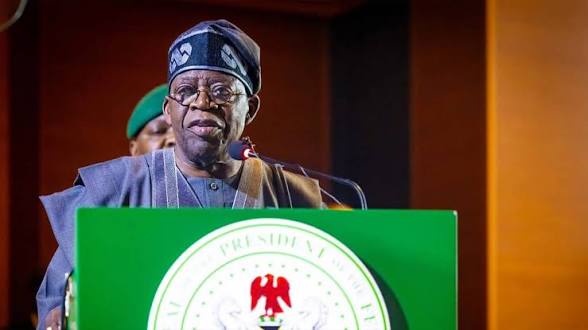
Since 2023, President Bola Ahmed Tinubu’s administration has introduced major policy reforms — including the removal of petrol subsidy, exchange rate unification, and curbing central bank deficit financing — under the Renewed Hope Agenda. These steps, according to the government, have contributed to stabilizing the economy and improving investor confidence.
However, despite signs of macroeconomic recovery, the World Bank report observed that Nigeria’s growth remains sluggish, with over 130 million citizens still living in poverty. The institution noted that while stability has been achieved, the nation’s economy has yet to transition “into a higher and inclusive growth path,” underscoring the need for renewed investment in productivity and job creation.
The $1 billion support package is therefore expected to serve as a catalyst for Nigeria’s next phase of economic reform — consolidating fiscal stability while accelerating private-sector–led development.