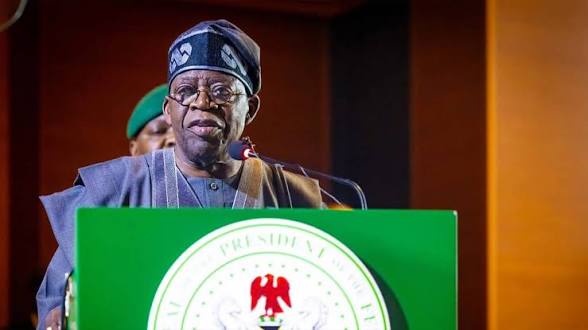
SDP’s 2023 presidential candidate, Prince Adewole Adebayo, has accused President Bola Tinubu of running what he described as an “absent-minded and rudderless government,” arguing that the worsening insecurity in the country is the direct result of poor leadership. In an interview with Ihechukwu Sunday, he assessed Nigeria’s current security challenges, the government’s response, and international reactions, including comments from the United States.
Adebayo described governance in Nigeria as “orderless,” with basic responsibilities at all levels left unattended. He said the administration appears directionless and reactive, giving the impression that the government wakes up each day without a clear plan. According to him, the president “lost control of his government” and has yet to assemble a coordinated team since taking office.
Responding to claims that he oversimplifies governance, he insisted that the government itself is the biggest obstacle to national security, arguing that criminals cannot operate freely without official cooperation. He questioned how kidnappers collect large ransom payments without interference from authorities, noting that ordinary citizens face strict bank scrutiny for far smaller transactions. He also wondered how mass abductions happen in local governments that all have police divisions, pointing out that the same government that captured a suspect overseas is unable to apprehend criminals operating within Nigeria.
On accusations that the opposition is exploiting the situation, Adebayo said the ruling party has created too many failures for critics to ignore. He argued that the government has underperformed in every sector, including security, economy, culture, sports, and foreign relations. According to him, insecurity in northern Nigeria now resembles the conditions of conflict-torn nations, and the government lacks the capacity to even explain its failures.
He disagreed with U.S. President Donald Trump’s claim that Nigeria is a “disgraced country,” saying the problem is a disgraced government, not a disgraced nation. Reacting to a claim by the SGF that recent attacks may be influenced by foreign interests, he compared it to a goalkeeper blaming a striker for playing too well, insisting that the government’s duty is to protect citizens regardless of where threats come from.
Adebayo maintained that Nigeria’s challenges stem from failed leadership. He said other nations face far worse crises but are able to manage them due to stronger leadership. Using Ukraine as an example, he argued that leadership determines whether a country withstands or collapses under pressure.
He described the insecurity situation as an existential threat, caused by non-state actors infiltrating government structures and the government being absent from its duties. He praised Nigerians for being patient despite the hardship but warned that international debates about intervention signal growing global concern.
Adebayo criticized the government for celebrating renewed U.S. security cooperation, saying the U.S. has always been willing to support Nigeria. He stated that federal authorities ignored opportunities to strengthen security and even failed to appoint ambassadors to key countries, weakening Nigeria’s diplomatic leverage. He noted that he and other opposition figures have long been in talks with foreign partners, advocating for stability and urging against any form of military intervention in Nigeria.
Commenting on recent military deployments and the withdrawal of police from VIP duties, Adebayo said the armed forces are not the problem; rather, the challenge is having “the wrong commander-in-chief.” He argued that the president has been reactive instead of strategic and urged him to emulate past leaders who maintained stronger, more consistent engagement with the military.