Igbo Leaders of Thought (ILT), a prominent group of Igbo intelligentsia, has issued a strongly worded communique calling for immediate international intervention, particularly from the United States, to address Nigeria’s spiraling security crisis and prevent a repeat of the 1960s pogroms and civil war.
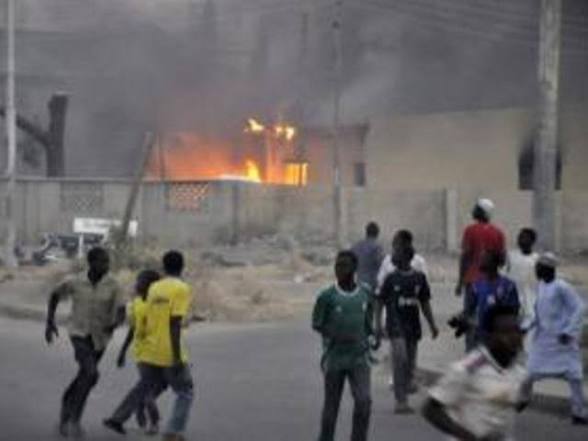
The leaders, speaking after a meeting in Enugu, warned that the country teeters on the brink of full-scale anarchy, marked by rampant killings, mass abductions, and government inaction that echoes the prelude to genocide against the Igbo. Signed by President Professor Elochukwu Amucheazi and Secretary Professor Jerry Chukwuokolo, the statement paints a grim picture of terrorists controlling territories, imposing taxes, sacking communities, shutting down schools, and abducting civilians—including military officers—with impunity.
The ILT highlighted a wave of recent atrocities to underscore the urgency, including the killing of two soldiers and abduction of a Brigadier General, followed by the kidnapping and murder of Brigadier-General Uba, the seizure of 25 female students in Kebbi, and over 101 Christian deaths documented in just 14 days across multiple states by a recent Intersociety report. They questioned, “Is there still a government in Nigeria?” amid the shutdown of federal schools and the exodus of leaders abroad. The group condemned attempts by some powerful Nigerians to trivialize or politicize the genocide against Christian communities in the Middle Belt and South, declaring, “It is appalling that some highly placed Nigerians are playing politics with a matter that threatens the survival of the country.”
Accusing past administrations, especially under Muhammadu Buhari, of enabling jihadist infiltration, integrating terrorists into the military, and ignoring foreign evidence against sponsors, the ILT welcomed U.S. concerns over Nigeria’s crisis. They urged President Donald Trump to deploy policy tools like the Global Magnitsky Act—to freeze assets, block SWIFT transactions, revoke visas, and sanction over 100 identified actors—and Executive Order 13886 to designate terrorism supporters, enabling global asset seizures.
These measures, they insisted, could “choke the infrastructure of terror” without American troops, while pushing for national restructuring per the 1967 Aburi Accord, devolving security to states and regions as the only path to survival.
In a sharp rebuke, the ILT denounced the life sentence imposed on Indigenous People of Biafra (IPOB) leader Mazi Nnamdi Kanu as “unjust, illegal, and politically motivated,” noting a Nigerian High Court had ruled his arrest unlawful, a Kenyan court fined its government for his illegal rendition, and no appellate court has overturned these decisions. Describing the conviction as “sad, indefensible and speculative,” they portrayed Kanu as “a Mandela-like symbol of resistance” and demanded his immediate release, compensation, and rehabilitation.
The leaders also decried “genocidal profiling and economic strangulation” of Igbo businesses in Lagos, aligning it with ethnic cleansing definitions.
The ILT stressed that jihadist terrorism, Fulani expansionism, and anti-Igbo policies are ideologically driven, declaring, “As long as injustice persists against the Igbo, the ideology of Biafra will persist.” They rejected narratives blaming Igbos for the crisis, praising former military president Ibrahim Babangida for clarifying in his book that the 1966 coup was not Igbo-led, and warned against repeating past lies.
Ultimately, they implored U.S. intervention—even physical, including invading to disperse bandits—stating, “We cannot watch history repeat itself,” and, “We owe it to future generations to halt this slide into genocide and war,” while calling for ethno-regional dialogue to uproot extremism.