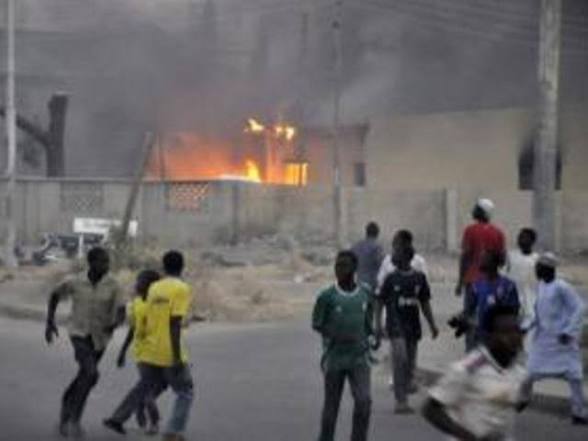
President Bola Tinubu has asserted that his administration will show no mercy towards terrorists, bandits, kidnappers, and their sponsors, emphasizing that armed groups and gun-wielding non-state actors will now be officially designated as terrorists.
He also announced a renewed offensive against violent crime as part of a significant overhaul of the country’s security framework.
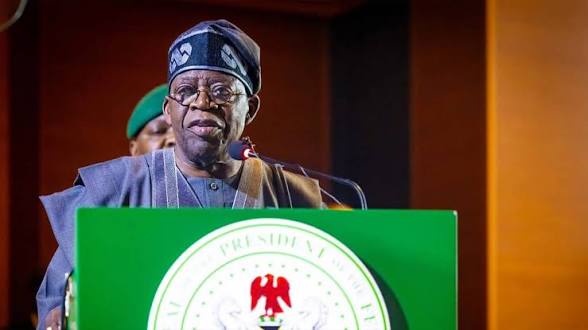
Tinubu made this commitment while presenting the N58.18 trillion 2026 Appropriation Bill to a joint session of the National Assembly on Friday.
Just hours before, the Federal Executive Council approved the budget framework during an emergency meeting, which was presided over for the first time by Vice President Kashim Shettima.
The proposed budget is dubbed, ‘Budget of Consolidation, Renewed Resilience and Shared Prosperity’.
The President allocated N5.41 trillion for Defence and Security, marking the largest single allocation in the proposed budget.
This indicates the third consecutive year that defence and security expenditures have been prioritized since the administration began presenting national budgets in November 2023.
Tinubu stated that the defence budget reflects his government’s commitment to ensuring that security serves as the foundation for national development.
He pledged that security spending under his administration would emphasize accountability and measurable outcomes, aiming to enhance the operational capacity of the armed forces and other security agencies through advanced equipment and technology.
The President reiterated his stance on dealing with terrorists and their sponsors, declaring that his administration would show no leniency towards those engaged in terrorism, banditry, kidnapping for ransom, and other violent crimes.
“We will show no mercy. We will usher in a new era of criminal justice. We will act firmly against those who commit or support acts of terrorism, banditry, kidnapping for ransom, and other violent crimes,” Tinubu stated.
He further revealed that his administration is resetting the national security architecture and introducing a new counter-terrorism doctrine.
This approach, he explained, is based on unified command, intelligence gathering, community stability, and counter-insurgency operations.
Under the new doctrine, any armed groups or gun-wielding non-state actors operating outside state authority will be categorized as terrorists.
Bandits, militias, armed gangs, violent cults, forest-based armed groups, and foreign-linked criminal networks will also be viewed as legitimate targets for security operations.
“Our administration is resetting the national security architecture and establishing a new national counter-terrorism doctrine. This holistic redesign is anchored on unified command, intelligence gathering, community stability, and counter-insurgency. Under this new architecture, any armed group or gun-wielding non-state actors operating outside the state’s authority will be regarded as terrorists. Bandits, militias, armed gangs, violent cults, forest-based armed groups, and foreign-linked networks will all be targeted. We will pursue all those who perpetrate violence for political or sectarian ends, along with those who finance and facilitate their schemes,” the President said.
He also emphasized that the government would target individuals and networks that finance or facilitate violence for political or sectarian objectives, asserting that the new doctrine aims to fundamentally reshape Nigeria’s approach to confronting terrorism and violent crime.
Budget Breakdown
Providing a sectoral breakdown of the proposed budget, the President noted, “Defence and Security will take N5.41 trillion; Infrastructure will follow with N3.56 trillion; Education will receive N3.52 trillion; Health and Social Services will be N2.48 trillion. These priorities are interlinked. Without security, investments will not thrive. Without education and healthy citizens, productivity will not rise. Without infrastructure, jobs and enterprises will not scale.”
Tinubu stated that the 2026 fiscal plan aims to promote discipline, realism, and sustainable growth.
“We will spend with purpose, manage debt responsibly, and pursue broad-based sustainable growth. The 2026 budget is anchored on realism, prudence, and growth,” he explained.
He disclosed that the total revenue for 2026 is projected at N34.33 trillion, while total expenditure stands at N58.18 trillion.
The President earmarked N15.52 trillion for debt servicing, with recurrent non-debt expenditure at N15.2 trillion, and capital expenditure at N26.08 trillion.
The budget deficit is estimated at N23.85 trillion, representing 4.28 percent of the country’s Gross Domestic Product.
“Our projections are based on a conservative crude oil benchmark of $64.85 per barrel, crude oil production of 1.8 million barrels per day, and an average exchange rate of N1,400 to the US dollar for the 2026 fiscal year,” Tinubu stated.
Vows to End Multiple Budgets
The President also announced the cessation of Nigeria’s longstanding issue of overlapping budgets and poorly funded capital projects, promising that his administration would implement a single, disciplined budget cycle starting in 2026.
This followed his earlier request to the National Assembly for approval to extend the implementation period of the 2025 Appropriation Act to March 31, 2026.
The request was conveyed in a letter dated December 18, read during a special plenary of the House of Representatives by Speaker Tajudeen Abbas.
Tinubu also sought legislative approval to consolidate the capital components of the 2024 and 2025 budgets.
According to the President, the request is part of broader fiscal reform measures aimed at eliminating the challenges posed by running multiple budgets concurrently, a practice that has historically hindered planning, execution, and accountability.
“Let me be upfront with you, this is a reset, a very hard one. Avoiding abandoned projects, unpaid contractual obligations, and running multiple budgets on one inflow is a problem staring the nation. By March 3, 2026, all capital liabilities from previous years will be fully funded and closed. From April, Nigeria will operate on a single budget backed by a single revenue cycle. No overlaps, no excuses, no rollovers,” Tinubu emphasized.
Assures Economic Stability
The President acknowledged the economic challenges faced by Nigerians since the start of his administration’s reforms, insisting that these measures are essential for stabilizing the economy and ensuring long-term prosperity.
“Though the path of reform is seldom smooth, it is the surest route to lasting stability and shared prosperity. Today, I present a budget that consolidates our gains, strengthens our resilience, and takes this country from survival to growth. It reflects our determination to lock in microeconomic stability, deepen competitiveness, and ensure growth translates into jobs, rising incomes, and a better quality of life for all Nigerians,” he stated.
In his address, Senate President Godswill Akpabio called for increased collaboration between the National Assembly and the Executive, highlighting that national progress relies on partnership rather than rivalry.
“Many in our country view the collaborative work between the National Assembly and the Executive as a sellout, but history shows nations advance when the legislature and executive work in concert and falter when they are locked in hostility. It is within this spirit of constitutional partnership, not rivalry, that great national decisions, like budgeting, gain meaning and momentum,” he said.
Speaker Tajudeen Abbas added that the proposed budget would restore economic stability.
“The message of this budget is clear: stability has been restored, confidence rebuilt, fiscal order strengthened, and the foundation for shared prosperity firmly in place,” he said.