The Department of State Services (DSS) has dramatically increased its security presence around Kuje Medium Security Custodial Centre in the nation’s capital following a high-stakes investigation into alleged terrorism financing involving a prominent former government official.
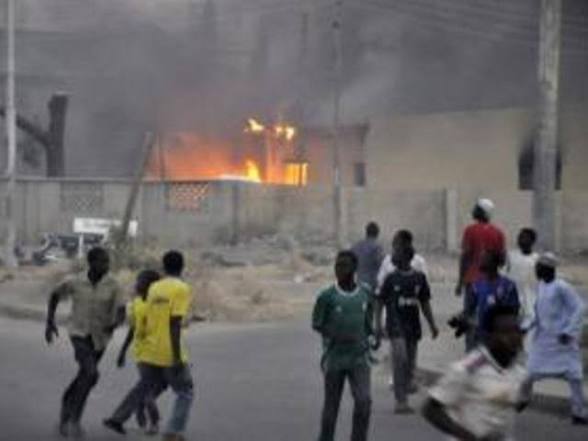
Beginning Wednesday, January 7, 2026, a convoy of security personnel, reported to include more than 50 DSS operatives, took up positions around the perimeter of Kuje Prison, heightening tensions and drawing attention from inmates, staff and visitors alike.
According to multiple sources who spoke with SaharaReporters, the operatives arrived in a fleet of approximately six Toyota Hilux vans, strategically deploying around key access points and monitoring all movement into and out of the custodial centre.
“About six Hilux vans are waiting at Kuje Prison,” one source said, describing the scene as unusually tense.
The deployment comes after a Federal High Court in Abuja granted bail this week to former Attorney-General of the Federation and Minister of Justice, Abubakar Malami, SAN, who is currently standing trial on money-laundering charges brought by the Economic and Financial Crimes Commission (EFCC).
While the bail application was successful, with the court setting strict conditions including ₦500 million bail with sureties who must own property in highbrow Abuja districts, security sources say the DSS presence is part of a parallel effort to guard against potential flight amid an ongoing terrorism financing probe.
The expanded inquiry, according to multiple interviews reviewed by SaharaReporters, extends beyond the current charges filed with the EFCC. Retired Nigerian Army General Danjuma Ali-Keffi, who led a previous counterterrorism task force, has publicly claimed that a wider network of suspects linked to terrorism financing was identified during a multi-agency probe under Operation Service Wide, a task force set up to follow financial flows tied to Boko Haram and related groups.
Ali-Keffi alleged that the probe exposed a series of “financiers” and connective links to senior public figures, although he stressed that these ties were uncovered based on intelligence and not direct accusations of wrongdoing by those named.
“I am not accusing Buratai, Malami or Emefiele of terrorism financing or knowingly associating with terrorists,” he told reporters in a December 2025 interview. “But the links emerged during investigations.”
Though the specific evidence remains classified, the scale of the DSS operation at Kuje suggests that the probe has now reached a critical phase, according to security insiders briefed on the matter.
Justice Emeka Nwite of the Federal High Court had earlier ruled that Malami and two co-defendants, his son and one of his wives, be admitted to bail in the EFCC’s 16-count money laundering case, with stringent requirements attached to their sureties and travel documentation.
The court also barred Malami from leaving the country without explicit prior permission, while ordering verification of property documents provided by his sureties.
The DSS deployment follows a series of high-profile terrorism and security cases in Nigeria, including ongoing prosecutions of terror suspects and their financiers, as well as recent government directives aimed at strengthening anti-terrorism enforcement nationwide.