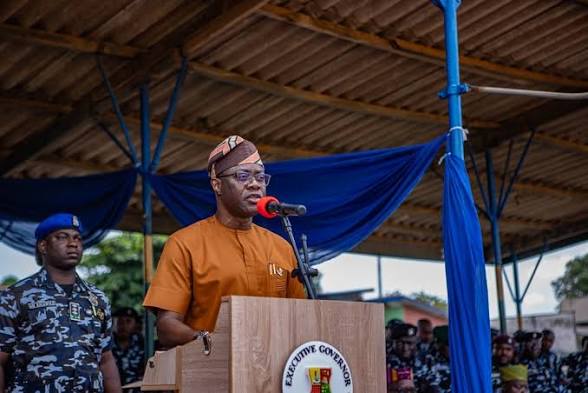
After nearly 15 years of inactivity, the Oyo State Council of Obas and Chiefs has been reconvened by Governor Seyi Makinde, a move that has reopened long-standing rivalries and revived unresolved questions over leadership within the state’s traditional institution.
Rather than restoring unity, the inauguration has exposed deep divisions over who should preside over the council. Authority within the Yoruba traditional system is historically rooted in lineage, custom, and hierarchy, with certain stools traditionally recognised as superior. In Oyo State, these long-established structures have remained a source of contention for decades.
Before the creation of Osun State in 1991, debates over traditional supremacy often centred on the Alaafin of Oyo and the Ooni of Ife. Although the state split was expected to end such rivalry, disagreements over hierarchy persisted and gradually evolved into broader disputes within Oyo State involving the Alaafin, the Olubadan of Ibadanland, and the Soun of Ogbomoso.
Successive military and civilian administrations have intervened cautiously in traditional disputes due to their political sensitivity. Past governments played key roles in resolving coronation crises and approving beaded crowns for some monarchs following wide consultations. Despite these efforts, tensions within the council deepened over time, particularly over the issue of leadership.
For decades, the Alaafin of Oyo served as the permanent chairman of the Council of Obas and Chiefs, reflecting the historical dominance of the old Oyo Empire. However, political reforms altered this structure. In 2004, the council was decentralised, before a brief return to Alaafin-led leadership in 2007. By 2011, a rotational chairmanship system involving the Alaafin, the Olubadan, and the Soun was introduced.
The reform, though officially framed as an attempt to promote fairness, was widely criticised and triggered legal challenges. A council meeting held under the new framework later descended into chaos, leading to the suspension of meetings and effectively paralysing the institution.
Following the suspension, the Oyo State Government halted council activities, citing ongoing court cases challenging amendments to the Council of Obas and Chiefs Law. The prolonged inactivity stalled the promotion of traditional rulers and weakened the administrative role of the council.
The council was eventually reconvened on January 15, 2026, under Governor Makinde, based on an amended law passed by the Oyo State House of Assembly in 2025. The Olubadan of Ibadanland, Oba Rashidi Ladoja, emerged as chairman under a rotational arrangement. However, the Alaafin of Oyo, Oba Akeem Owoade, was absent from the inauguration, with his palace disputing claims that he agreed to the arrangement.
Further controversy followed over claims that invitations to the inauguration were issued late and over uncertainty surrounding the legal framework and composition of the reconstituted council. Some traditional rulers reportedly remain unclear about their status under the amended law.
In 2025, attempts by the House of Assembly to restore the Alaafin as permanent chairman were strongly opposed, particularly by stakeholders from Ibadan and Ogbomoso, who argued that such a move would ignore historical changes following the collapse of the Oyo Empire and undermine regional balance. The Assembly ultimately retained the rotational system after intense lobbying and petitions.
Beyond questions of protocol and leadership, the dispute reflects deeper tensions between tradition and modern governance. While supporters of the Alaafin emphasise Oyo’s historical political authority, others maintain that influence within Yorubaland has long been decentralised.
For now, the traditional institution remains fragile, with unresolved legal, historical, and political questions continuing to shape the future of the Oyo State Council of Obas and Chiefs.