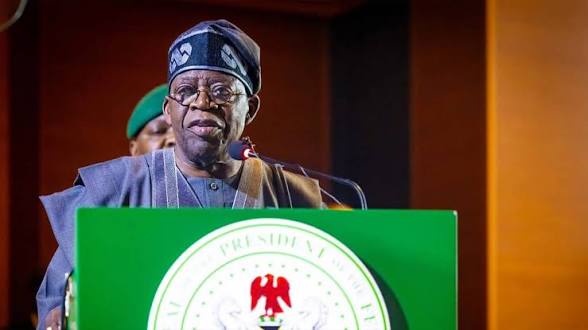
Senate President Godswill Akpabio has denied claims that the National Assembly removed electronic transmission of election results from the proposed amendment to the Electoral Act.
Akpabio clarified that lawmakers only objected to making real-time transmission mandatory, stressing that the legislative process on the amendment is still ongoing.
He spoke in Abuja while serving as special guest of honour at the unveiling of a book titled The Burden of Legislators in Nigeria, authored by Senator Effiong Bob.
According to him, critics of the amendment are drawing conclusions from an incomplete legislative process. His remarks followed criticism from opposition parties, civil society organisations, and professional bodies, including the Nigerian Bar Association (NBA), over reports that the Senate rejected mandatory real-time electronic transmission of election results.
On Saturday, the NBA urged the National Assembly to reinstate compulsory electronic transmission in the amended law, warning that retaining the current provision—which allows result transmission “in a manner as prescribed by the Commission”—could weaken transparency and create room for manipulation.
Responding, Akpabio said debates over the bill were premature, noting that the Senate had not concluded work on the amendment.
“The Electoral Act amendment is incomplete. We have not finished it, yet people are already debating it on television. They do not understand lawmaking,” he said.
He added that a bill only becomes final after lawmakers consider the Votes and Proceedings, insisting that public commentary at this stage was misguided.
Akpabio also criticised what he described as attempts by some civil society actors to impose their views on the legislature.
“People have become mouth legislators. If you want to make laws, contest elections and join the legislature. Retreats are consultations, not lawmaking,” he said.
The Senate president reiterated that no method of transmitting election results had been removed from the bill.
“I must state clearly that the Senate has not removed any means of transmission. Whether you transmit results physically, electronically, or through any device, it is still allowed,” he said.
He explained that lawmakers were concerned that mandating real-time transmission could lead to legal challenges in situations where elections are disrupted by poor network coverage, power outages, or insecurity.
“If you insist on real-time transmission and there is a network failure or grid collapse, someone will go to court and argue that the results are invalid because they were not transmitted in real time,” Akpabio said.
He warned that such a provision could disenfranchise voters in areas affected by insecurity or weak telecommunications infrastructure.
Akpabio concluded that the Independent National Electoral Commission (INEC) should retain the authority to determine the mode and timing of result transmission within the framework of the law, cautioning that electoral reforms must reflect Nigeria’s legal and infrastructural realities.
“When people do not understand their legislature, democracy is at risk. Democracy is guided by principles, not passion alone,” he said.