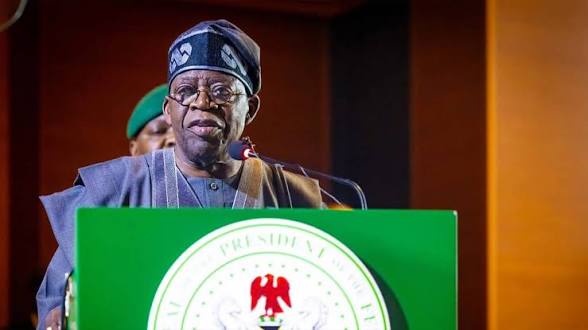
The former Vice President, Atiku Abubakar, has declared that the Nigerian National Petroleum Company Limited’s (NNPCL) recent admission that the $1.5 billion rehabilitation of the Port Harcourt refinery was economically wasteful confirms his long-standing argument that Nigeria’s state-owned refineries should be privatised. Atiku made the comments on Sunday via a statement posted on his X (formerly Twitter) handle, reacting to public remarks attributed to the NNPCL’s leadership.
At the centre of Atiku’s critique is a disclosure by NNPCL Group Chief Executive Officer, Bayo Ojulari, who acknowledged that the government-run refineries, including the Port Harcourt facility, were operating at a “monumental loss” to the Nigerian economy. According to Ojulari, the inefficiencies and ongoing losses from running the refineries necessitated halting operations to prevent further financial drag on the nation’s resources.
Atiku said this much-anticipated admission, that the massive investment had failed to deliver value, underscored what he described as the futility of state ownership of these assets. “After gulping $1.5bn, the Nigerian National Petroleum Company Limited has now admitted that reopening the Port Harcourt Refinery is a waste of scarce resources,” he stated, adding that the NNPCL’s own assessment vindicated his repeated calls for privatisation.
He argued that years of turnaround maintenance and repeated infusions of public funds have not produced meaningful refinery output, leaving the country dependent on imported petroleum products despite billions of dollars spent. “It is instructive that the Tinubu administration has finally come to terms with an inevitable truth: pouring public funds into moribund refineries is economically indefensible,” Atiku said, accusing successive governments of elevating political interests over sound economic policy.
Atiku also lamented the ongoing cost of keeping the facilities staffed, even when they do not produce petrol. “The payment of billions of naira in salaries to facilities that produce no petrol… does not serve the national interest,” he said, adding that his advocacy for privatisation had previously drawn criticism from detractors who accused him of plotting to sell public assets to cronies. “Today, the facts have caught up with the rhetoric,” he declared.
On the broader issue of how best to restructure Nigeria’s refining sector, Atiku maintained that any arrangements involving foreign partners that replicate failed strategies should also be abandoned. “Nigeria would have been better served by selling the refineries pre-rehabilitation to avoid ballooning debt and the steady depreciation of what have effectively become liabilities,” he said.
His intervention comes amid longstanding challenges within Nigeria’s downstream petroleum industry, where state-owned refineries have struggled to achieve full operational capacity despite repeated rehabilitation efforts and substantial financial commitments. Experts and critics alike have pointed to operational, technical, governance, and contractual issues as persistent barriers to refinery viability.